SuiteDash Features — All-in-One Client Portal, CRM & Project Management
One platform on a single shared data layer
SuiteDash is not a bundle of separate products sold together. It is one system, built on a single shared data layer, where every toolkit reads and writes the same records. That single design decision is what produces almost every practical difference between SuiteDash and a stack of best-of-breed tools connected by integrations.
When a contact is created in the CRM, that contact is immediately available to Invoicing, Estimates, Proposals, Appointment Scheduling, Drip Sequences, the LMS, and every other toolkit. There is no API call between them, no connector to authorise, and no sync step to wait for or to debug. The invoicing side already knows what the CRM knows, because it is the same data rather than a copy of it.
That is the mechanism behind the phrase “all-in-one”. The category word is used by nearly every vendor in this space, so it is worth stating plainly what it means here: not a suite of applications that talk to each other, but one application with many toolkits.
The 25+ native toolkits
Every capability below is a first-class native system inside SuiteDash, not an integration, a marketplace add-on, or a thin wrapper around somebody else’s product. There are twenty-seven of them:
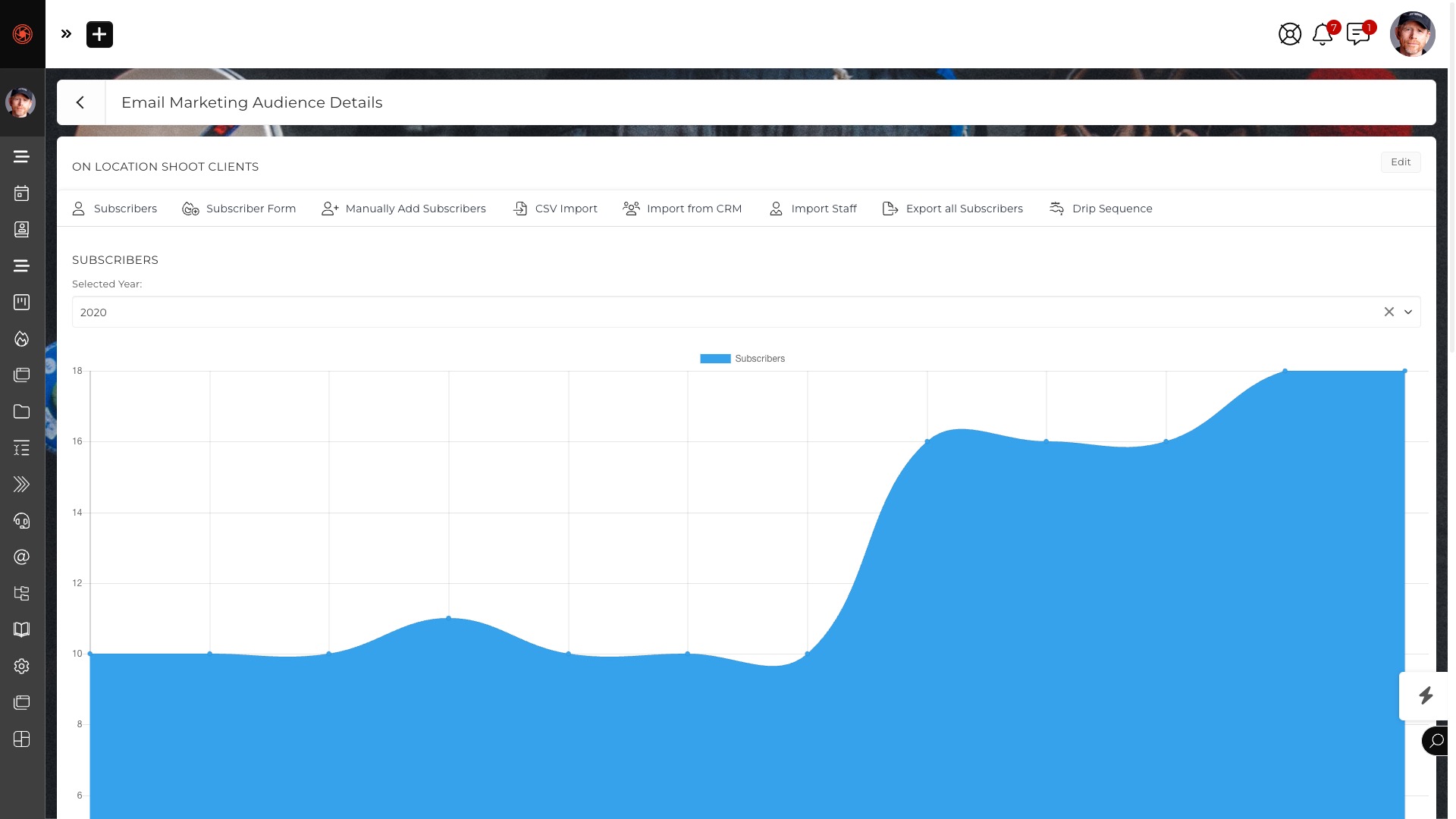
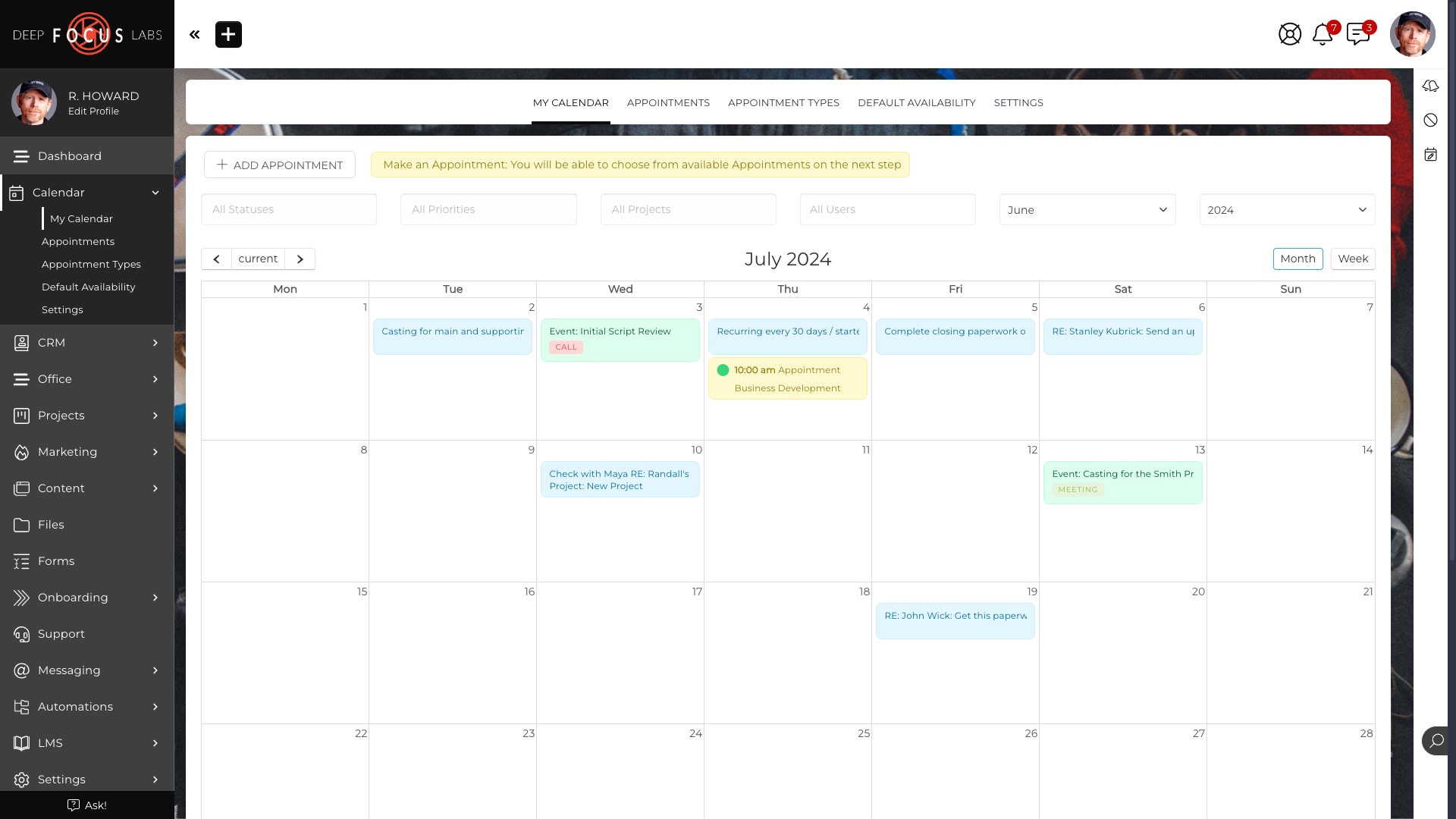
CRM · Client Portal · Client Onboarding · Project Management · Task Management · Time Tracking · Invoicing & Billing · Estimates · Proposals · Contracts · Subscriptions & Recurring Payments · Service Subscriptions · Deals and Sales Pipeline · Appointment Scheduling · Email Marketing & Drip Sequences · Forms · Automation & FLOWs · Documents & eSigning · File Exchange · Support Tickets · Secure Messaging · Live Chat · LMS · Dashboards & Portal Pages · Content Block Editor · Reporting & Analytics · Translation & Localization.
We publish the number and the list together, always. A count on its own is not checkable, and a claim you cannot check is a claim you should not believe. Twenty-seven are nameable, which is why the headline figure is 25+ rather than something rounder and larger.
Power-Ups are counted separately, on top of that list rather than inside it. WORLDs gives you self-contained environments, each with its own subset of CRM data, assets and permissions, so contacts assigned to one WORLD are invisible to staff outside it. Community Forums adds private discussion spaces. Both are paid add-ons, and neither is folded into the toolkit count.
What “tightly bound” actually means
“Integrated” is another word every vendor uses. Here is what it refers to specifically.
One permission model, not one per tool
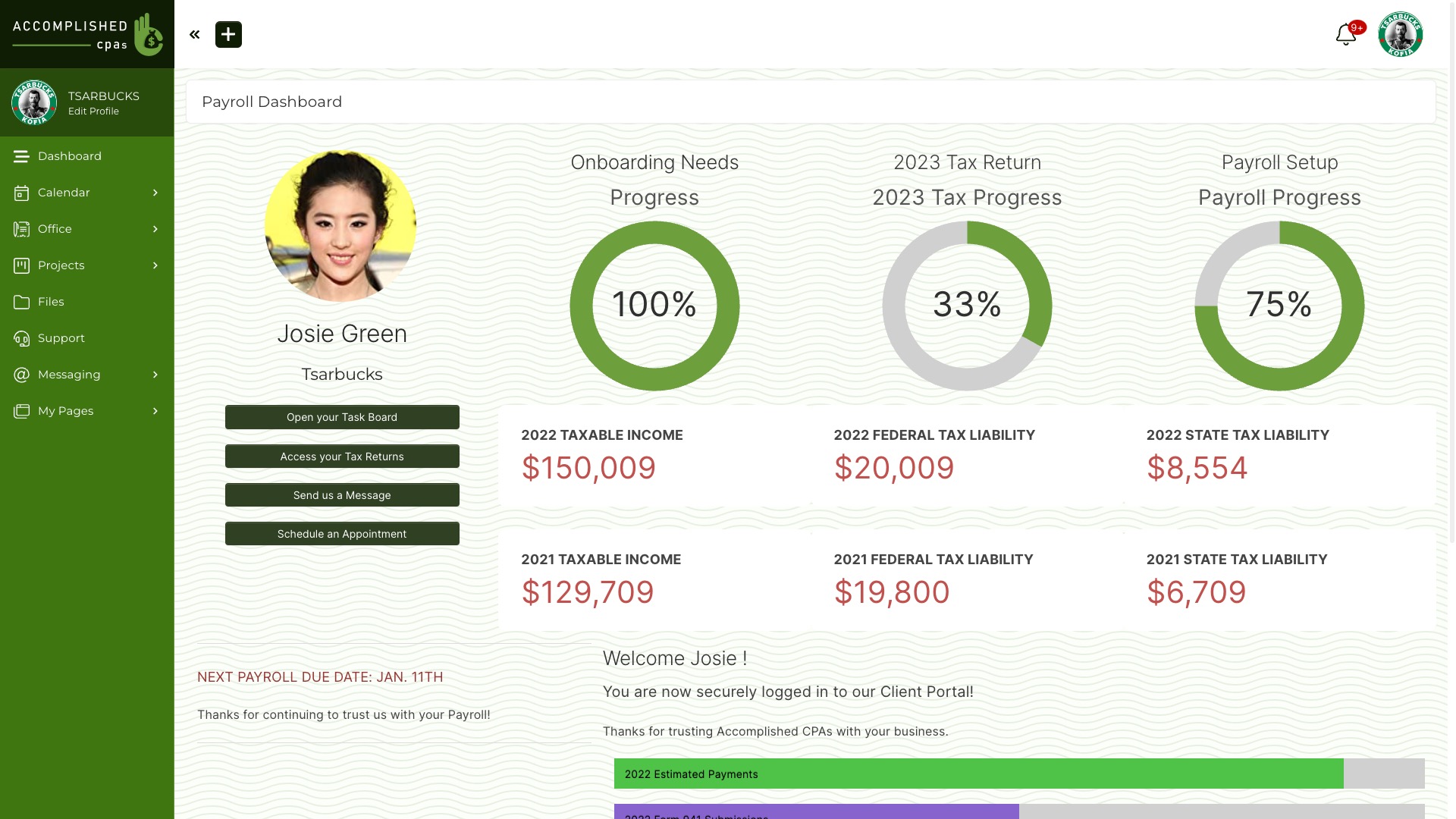
Permissions are managed once, platform-wide, through Circles. A Circle controls what Contacts and Staff can see and access across every toolkit at once. On a stitched-together stack you maintain a separate permission model in each product, and the gaps between them are where accidents happen.
One record per client
The same client is not duplicated across five products, slowly drifting apart as each one is edited independently. There is one record. Update an address once and it is correct everywhere, including on the invoice that has not been sent yet.
Custom fields that mean the same thing everywhere
A custom field defined once is consistent across all modules. It does not have to be recreated, remapped, or kept in sync between systems that each have their own idea of what a field is.
Automation that cannot break at a seam
FLOWs connect CRM actions to Invoices, Projects, Documents, Email Cannons and Forms inside one system. Automations fire from triggers across every toolkit: CRM events, form submissions, proposal signatures, invoice payments, bookings, project completions and deal-stage changes. Because the automation never crosses a vendor boundary, there is no integration seam for it to break at when somebody else changes an API.
One export, one audit surface
At compliance time, or at renewal time, or when a client asks what you hold about them, the answer lives in one place instead of being assembled from a dozen vendors.
The cost of a stitched-together stack
None of this is an argument that the individual products in a typical stack are bad. Most of them are excellent at the one thing they do. The costs are structural, and they show up regardless of how good the components are:
- Client records duplicated across tools, conflicting quietly until someone notices.
- Sync lag between systems that are supposed to agree, and reconciliation work when they do not.
- Per-seat costs that multiply by headcount and by the number of tools in the stack.
- Automations that break when one vendor changes an API, usually discovered by a client rather than by you.
- Separate logins, separate permission models and separate audit trails.
- Connector subscriptions, task limits and per-operation fees layered on top of the subscriptions themselves.
The integration work in SuiteDash is done in advance. There is no connector to configure, pay for, or repair.
Flat pricing is a consequence of the architecture
SuiteDash is flat rate with unlimited users on every plan: Start at $19/month, Thrive at $49/month, Pinnacle at $99/month. There is no per-seat cost. Lifetime tiers are available at $1,990, $4,990 and $9,990, and every plan starts with a 14-day free trial on full Pinnacle features, with no credit card required.
Unlimited users is not a discount, it is a structural consequence. A stack of per-seat tools multiplies cost by headcount and by tool count at the same time, which is why adding a fifth person to a five-product stack is a much larger decision than it ought to be. One platform with one price removes that multiplication.
Pass-through services are billed at cost with no markup: SMS through Twilio, marketing-email deliverability, and AI credits. You pay what we pay.
White-label that reaches the DNS layer
The client-facing side of SuiteDash can be presented entirely as your own product. That includes a custom domain with automatic SSL provisioning, a branded login page with five layout options, a branded mobile experience delivered as a progressive web app, and every notification email sent under your brand through domain-verified sending or your own SMTP. Platform-wide theming covers logos and colours across dashboards, login and email, plus a customisable loading animation and custom CSS.
The part most platforms do not do: the white label extends to the DNS layer. SuiteDash maintains a set of neutral domains offering CNAME targets that do not identify the platform, so a customer who inspects your portal’s DNS record does not discover what powers it. Pointing at a SuiteDash-branded host remains available for anyone who does not need the concealment.
Mobile is a progressive web app under your brand. There is no App Store or Google Play listing, and that is deliberate: a store listing would carry the vendor’s identity into the one place a white-labelled product cannot afford it.
Who this is built for
SuiteDash is purpose-built for small and medium businesses: solopreneurs through teams of roughly ten to twenty people. It scales comfortably beyond that, and plenty of larger organisations run on it, but the design centre is the operator who wants enterprise-grade capability without enterprise cost, enterprise procurement, or a professional-services implementation.
The contrast with Monday.com, Salesforce and HubSpot is one of intent rather than capability. Those platforms optimise for enterprise seat expansion, and their pricing says so. SuiteDash optimises for the SMB operator, and the flat-rate unlimited-user pricing is the structural proof of it.
Typical fits are service businesses that work with clients over time and need a professional branded portal: agencies, consultants, coaches, accountants and bookkeepers, law firms, financial advisors, and any operation where the same client relationship spans proposals, projects, invoices, files and support.
SuiteDash was founded in 2015 by Mike Lambert and is built by a fully distributed team. It holds a 4.8 out of 5 rating across 633 verified reviews on Capterra.