File Sharing & Collaboration Software
A team needs to collaborate on documents. One designer uploads a sketch for a project. An accountant reviews it, adds notes, and uploads a revised version. The project manager sees two versions with the same name, doesn’t know which is current, and uses the wrong one for client presentation. Chaos ensues.
This is the problem file sharing software solves. Not by dumping files in a folder. By organizing them. Versioning them. Controlling who sees what. Allowing simultaneous editing without overwriting each other’s work. Tracking who changed what and when.
File sharing software serves one critical function: it makes collaborative work possible without confusion. Instead of email attachments with names like “Project_FINAL_v2_ACTUAL_FINAL.docx” scattered across inboxes, files live in one organized, versioned, permission-controlled workspace.
When a team member needs a document, they know exactly where to find it. When they edit it, everyone else sees the changes simultaneously. When they need to revert to an earlier version, complete history is available. When they need to restrict access, permission controls prevent unauthorized viewing.
SuiteDash includes file sharing as one module alongside projects, invoicing, CRM, automation, proposals, and portals. All sharing the same permission system and contact database. This integration eliminates scattered file locations and permission confusion.
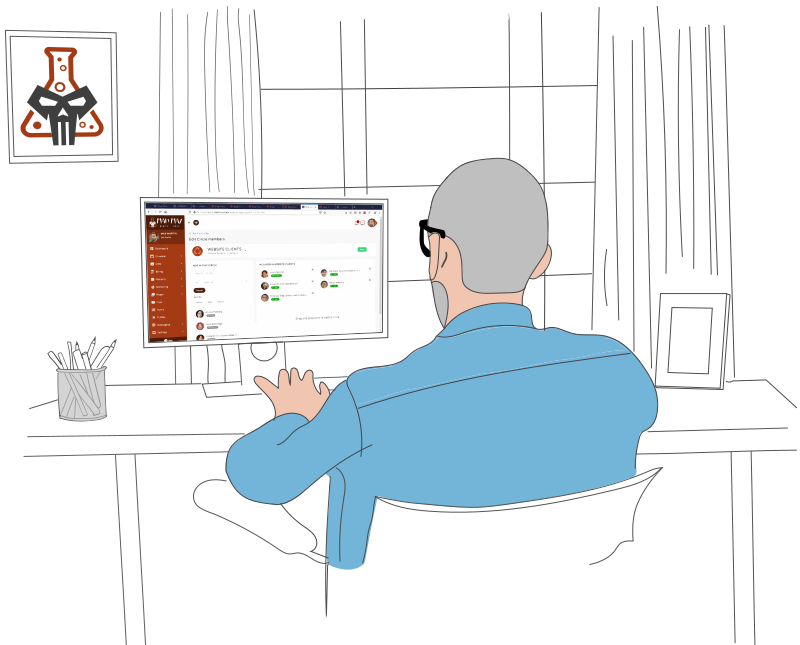
Core File Collaboration Capabilities
Most CRM platforms handle six core functions. Understanding what each does helps you evaluate whether CRM makes sense for your business.
1. Drag-and-Drop File Upload
Upload files by dragging them from your desktop into the file sharing workspace. No complicated upload dialogs. No file size restrictions that prevent uploading high-resolution images or video. Simple drag-and-drop that feels natural to how team members already work.
Why it matters: Low friction adoption. Team members don’t need training on how to upload files—they already know how to drag and drop.
2. Folder Organization & Structure
Create hierarchical folder structures that mirror your business organization. Store project files in project folders. Store client assets in client folders. Create subfolders for different document types (contracts, proposals, designs, deliverables). Navigate your file structure intuitively instead of scrolling through a flat, chaotic list.
Why it matters: A single source of truth for files. Team members know exactly where to find what they need instead of searching through email or asking colleagues “where’s that file?”
3. File Permissions & Sharing
Control who sees what. Grant view-only access to sensitive files. Restrict editing to specific team members. Share with external collaborators without giving them access to your entire workspace. Revoke access instantly if a team member leaves or a collaborator completes their work.
Why it matters: Security and control. Confidential client data stays confidential. Team members see only files relevant to their role.
4. Real-Time Collaboration
Edit documents simultaneously with teammates. Changes appear instantly for everyone viewing the same file. No more downloading, editing offline, and uploading a new version that overwrites someone else’s work. Real-time collaboration means your entire team can work on the same document without version conflicts.
Why it matters: Speed and accuracy. Team members don’t waste time managing file versions or re-doing work because someone else made conflicting edits.
5. Comments & Annotations
Leave comments on files or specific sections. Annotate designs, mark up documents, and flag sections for attention. Threaded comments keep feedback organized. Comments tie feedback to specific moments in the file’s history.
Why it matters: Clear feedback without endless email chains. Questions, suggestions, and approval notes live with the document they reference.
6. File Preview & Preview
Preview files without downloading them. View images, PDFs, documents, and spreadsheets directly in the browser. Full preview means team members can assess content before deciding whether to download or edit.
Why it matters: Faster workflow. Team members confirm they have the right file before opening it in their desktop application.
7. Activity Tracking
See complete history of who uploaded, edited, or downloaded each file. Track version history and revert to earlier versions if needed. Activity logs answer the critical questions: who changed this file last, when did they change it, and what did it look like before their edit?
Why it matters: Accountability and recovery. You can see the complete evolution of any file and restore previous versions if an edit goes wrong.
Why This Integration Matters
Most standalone file sharing tools do these seven things well. SuiteDash’s advantage: all seven capabilities plus invoicing, proposals, project management, email marketing, and automations in one platform. Your team has complete file context without leaving the app. When a project closes, all project files stay organized together. When proposals are created, file attachments pull directly from your shared workspace. One interface. One shared data layer. Complete context.
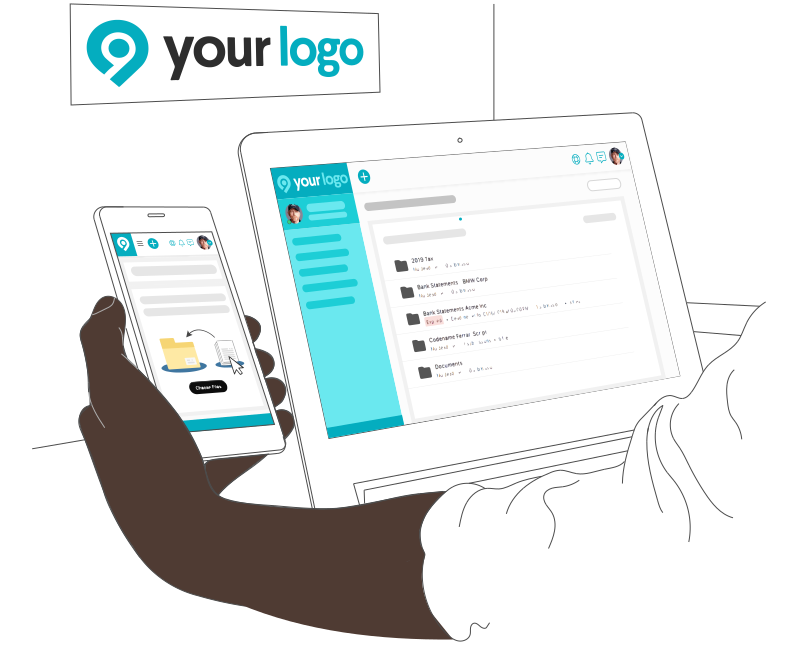
Who Uses File Collaboration?
File collaboration software is valuable wherever teams work on documents together. Certain industries benefit dramatically from organized, version-controlled, permission-protected file sharing.
B2B Services (consulting, marketing agencies, design shops) juggle multiple concurrent client projects with distributed teams. File sharing keeps all project documents organized, version-controlled, and accessible to the right team members without scattered emails and duplicate versions.
Creative Teams (design studios, production houses, marketing departments) create documents, designs, and media collaboratively. File sharing eliminates “Final_v2_ACTUAL_final.psd” chaos and lets designers mark up each other’s work with inline comments.
Legal & Professional Services (law firms, accounting, consulting) manage confidential client documents. File sharing with granular permissions ensures sensitive files stay restricted, and version history provides audit trails for compliance.
Remote Teams (distributed companies, hybrid workforces, freelance networks) can’t rely on passing documents hand-to-hand. File sharing creates a centralized workspace where remote team members access the same documents, see changes in real-time, and don’t duplicate work.
Financial Services (accounting, wealth management, bookkeeping) handle sensitive financial documents. File sharing with permission controls ensures only authorized team members access client data, and activity logs provide compliance audit trails.
Nonprofits coordinate volunteers, manage grant documentation, and organize donor materials. File sharing keeps all nonprofit documents in one secure, organized workspace accessible to staff and board members.
Team Size Matters
Solo freelancers working alone may not need file sharing. A single local hard drive works fine when there’s only one person creating and editing files.
Small teams (2-5 people) see immediate value from file sharing. When multiple people work on the same documents, file sharing prevents version conflicts and keeps everyone editing the current version.
Growing teams (5-50 people) need granular permission levels, folder organization, and activity tracking to prevent chaos. As team size grows, the cost of managing file versions and controlling access balloons.
If your team collaborates on documents, creates files together, or needs to control who accesses what, you benefit from file sharing. The bigger your team or the more complex your permission requirements, the more valuable file collaboration becomes.
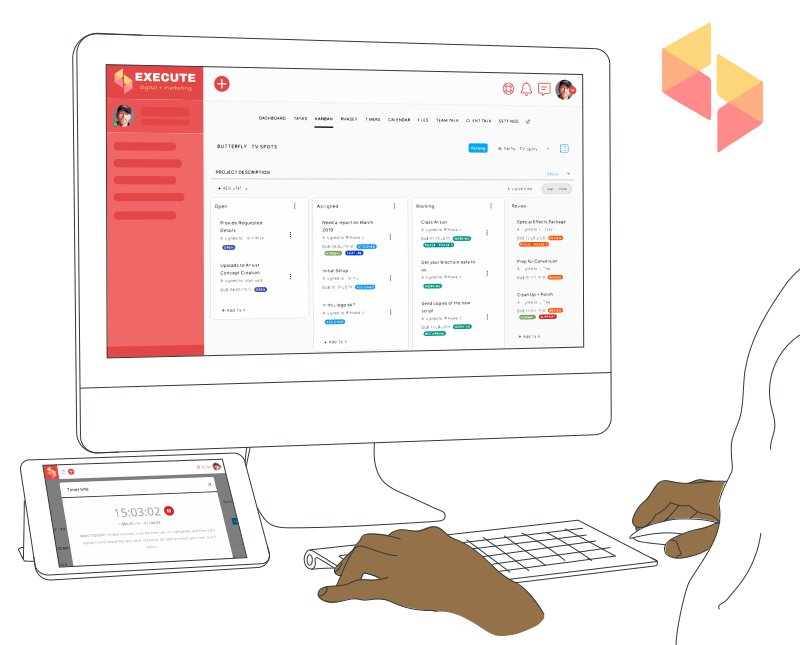
File Sharing vs. Email Attachments: Why Organization Matters
Email attachments feel simple. Hit reply, attach a file, send. But attachments create chaos for collaborative teams. Multiple versions accumulate. Different people have different versions. Wrong versions get used.
The Problem
A design team is working on a client brand refresh. Here’s what happens with email attachments:
- Designer emails initial concepts as attached PSDs
- Client reviews, adds comments inline, saves their own version, and emails back
- Someone receives two versions with similar names
- Designer continues editing the wrong version
- Client sees outdated comps in the final presentation
Result: Version confusion. Lost feedback. Duplicate work. Team members unaware of changes. Different people working on different versions simultaneously, overwriting each other’s edits.
The SuiteDash Approach
File sharing plus projects plus CRM plus proposals, all in one interface, all sharing the same permission system.
When a deal closes in the CRM, the team transitions to project management without re-entering customer data. Project time automatically converts to invoice line items. Email campaigns use the same contact list. Nobody switches tools or re-enters information.
One workspace. One version of truth. Complete project context from initial brief through final deliverables.
Why This Matters
Standalone file sharing tools are powerful for teams that only need cloud storage. Dropbox and Google Drive excel at that specific function.
For project-based teams, consulting agencies, and service businesses, integrated file sharing matters more. You’re not just storing files. You’re collaborating on them. You need organization. You need permissions tied to projects. You need activity tracking. You need file sharing connected to the actual projects those files support. One workspace. One permission system. Complete context.

What to Look For in File Sharing Software
When evaluating file sharing software, look for these capabilities:
Folder Organization & Hierarchy
Create nested folders that mirror your business structure. Store client files in client folders, project files in project folders, and archive completed projects without deleting them. Intuitive navigation saves time searching for files.
Granular Permissions
Control access at the file and folder level. Grant view-only access, editing rights, or full control to specific team members or external collaborators. Revoke access instantly when people leave or projects complete.
Real-Time Collaboration
Edit documents simultaneously with teammates. Changes sync in real-time. No more downloading files, working offline, and uploading conflicting versions that overwrite each other’s edits.
Version History & Recovery
Access complete file history and revert to any previous version instantly. See who made changes, when they made them, and what changed. Perfect for recovering from accidental edits or comparing versions.
Comments & Annotations
Leave feedback directly on files. Thread conversations around specific sections. Comments stay with the file, creating a record of feedback, decisions, and approvals tied to each document.
Activity Tracking
See complete logs of who accessed, edited, or downloaded each file. Timestamps answer critical questions: when was this file last updated, who updated it, and what did they change?
File Preview Capabilities
Preview images, PDFs, documents, spreadsheets, and videos directly in the browser without downloading. Full previews let team members confirm they have the right file before opening in a desktop app.
Mobile Access
Upload, download, and preview files from mobile devices. Mobile apps let field teams and remote workers access files, add comments, and collaborate from anywhere—not just the office.
Sharing & External Collaboration
Share files and folders with external clients, vendors, and partners without giving them access to your entire workspace. Set expiration dates on shared links and disable downloads if needed.
Search & Discovery
Search files by name, tags, or content. Full-text search lets team members find files instantly instead of scrolling through folders or asking colleagues “where’s that file?”
SuiteDash includes all 10 of these capabilities. Additionally, the same platform provides projects, invoicing, CRM, automation across modules, proposals, LMS, and support tickets. File sharing connects to the projects and contacts they support. You’re not building a tool stack. You’re using one integrated system.
How to Choose the Right File Sharing Solution
1. Evaluate Your Team Size and Sales Process
Solo freelancer: Local file storage is sufficient. You remember your clients.
Small team (2-5 people): Basic organization matters. Multiple team members need access. Automation prevents follow-ups from being forgotten.
Larger team (5-50+ people): Granular permissions, folder hierarchies, and activity tracking, and team reporting become essential.
2. Consider Your Sales Cycle Length
Document-heavy teams (contracts, proposals, reports): Real-time editing and version history matter. Focus is on closing speed.
Design teams (creative files, high-resolution assets): Comments and annotations matter. You need to track progression and understand why deals stall.
Mixed teams (documents + designs + spreadsheets): Unified file sharing with multiple preview formats, and deal notes are all critical. Your deal pipeline is your business.
3. Assess Your Integration Needs
Standalone file storage: If file storage is your only need, Dropbox and Google Drive are excellent. You’re optimizing one function deeply.
Project-connected file sharing: If files connect to projects (client projects, deliverables, proposals), an all-in-one platform reduces tool sprawl.
Permission-heavy sharing: If you share files with external collaborators and need granular controls, a modular platform with strong APIs might be necessary.
4. Compare Total Cost of Ownership
Standalone CRM: Dropbox ($9-18/month personal), Google Drive (free-$12/month/month depending on tier), Pipedrive ($29-99/month per user). Most teams need 3-5 users.
Integrated platform: SuiteDash ($14-69/month per user) includes CRM plus 7+ other tools. No invoicing tool needed. No project management tool needed. No email marketing tool needed.
ROI calculation: Most teams spend $50-150/month on file sharing. SuiteDash ($14-69/month) replaces most of those.
5. Evaluate Implementation and Training Time
Complex file sharing (Enterprise systems): 2-4 months for full setup, often requiring certified consultants and significant customization.
Standalone file sharing (Dropbox, Google): 1 week. Learning curve is moderate. Most teams are productive after 2-3 weeks.
Integrated file sharing (SuiteDash): 1-2 weeks. File sharing is intuitive. Team adoption is high because it connects to projects they already use.
Faster implementation means faster team adoption and immediate productivity gains.
SuiteDash’s Approach to File Sharing
SuiteDash’s file sharing isn’t positioned as a competitor to Dropbox or Google Drive for simple cloud storage. Those tools excel at that. SuiteDash’s file sharing has a different philosophy: integration with projects, contacts, and proposals for service-based teams.
1. All-in-One Shared Data Layer
Every file in SuiteDash connects to projects and contacts. Upload files to a project folder, and those files are instantly accessible to all project team members with permission controls enforced automatically.
This eliminates the duplicate file problem. You never have three versions of “ProjectProposal_FINAL.docx” in your email, Dropbox, and project folder. One location. One current version. One source of truth.
2. Contacts Are Universal
In SuiteDash, files are organized by the projects they support, not scattered across email and unrelated folders. A proposal file lives in the project folder. A design asset lives with the design project. A contract lives with the client record. One place. Context preserved.
Contrast this with tools where files sit in a flat “Documents” folder with no connection to the projects they support. Find a proposal file, and you don’t know which client it’s for. This eliminates that confusion.
3. Automation Across Modules
When a project is created, its files are instantly organized and accessible. File permissions inherit from project permissions. When project team members change, file access updates automatically. When a project completes, files stay organized for historical reference. No manual permission management.
No third-party syncing. No manually updating permissions in multiple tools. One permission system across projects and files.
Real Example
A consulting firm wins a client project. In traditional systems, the team manually: creates a project in one tool, uploads files to Dropbox, sends an email with Dropbox links, the client downloads files, edits them, emails them back, and the team reuploads the new versions.
In SuiteDash, files live in the project folder. Designer uploads initial concepts. Client logs into SuiteDash, accesses the project folder, previews files, and adds comments. Designer sees feedback instantly. Edits the file in-place. All versions stored. Complete feedback history.
All happen instantly. No manual switching. No data re-entry.
This is what integration means. It’s not just “all your tools in one tab.” It’s your tools speaking the same language and working together automatically.
File Sharing & Collaboration: Frequently Asked Questions
What is file sharing software?
File sharing software centralizes documents, designs, and media in one organized, version-controlled workspace. It tracks contacts, opportunities, and activities across your sales team, providing visibility into deal progress and customer relationships. Most CRM tools offer pipeline management, activity logging, forecasting, and reporting. CRM helps teams close deals faster, retain customers longer, and maintain organized customer information that prevents critical details from being forgotten or lost.
What are the core features of file sharing software?
Essential file sharing features include folder organization, file upload/download, permission controls, version history, and activity tracking. Advanced file sharing tools add real-time collaboration, comments and annotations, file preview capabilities, mobile access, and full-text search. Most modern file sharing platforms offer API access for third-party integrations and mobile apps for team members working remotely. The right feature set depends on your team size, file types, collaboration patterns, and whether files connect to projects. (Kanban view), activity logging (calls, emails, meetings), task and reminder management, opportunity/deal tracking, and reporting/forecasting. Advanced CRM tools add lead scoring, workflow automation, email integration, mobile access, and custom field creation. Most modern CRM platforms offer API access for third-party integrations and mobile apps for team members working remotely. The right feature set depends on your team size, sales cycle length, and integration requirements with other business tools.
Why do businesses need file sharing software?
File sharing software prevents version confusion when teams collaborate on documents when team members leave, ensures follow-ups never slip, and gives sales managers visibility into pipeline progress. Without CRM, customer data lives in spreadsheets, individual inboxes, or team members’ heads. CRM centralizes this information, making it accessible and searchable. For sales teams, visibility into pipeline acceleration and deal progress enables faster revenue prediction and better resource allocation. CRM also improves customer retention by tracking interaction history and preferences.
What’s the difference between file sharing and cloud storage?
Cloud storage (Dropbox, Google Drive) saves files online. File sharing adds collaboration: version history, comments, real-time editing, and activity tracking. CRM adds sales pipeline tracking (stages of deals), activity logging (every interaction tied to a contact), opportunity management, and forecasting tools. CRM systems also include workflow automation (triggers that move deals or create tasks), reporting on team performance, and integration with email and calendar tools. Contact databases are flat records; CRM adds the context of where each customer is in your sales process and their entire interaction history.
How does file sharing improve team productivity?
File sharing eliminates time spent searching for files in email, asking colleagues “which version is current?” or managing multiple versions of the same document., digging through email threads, or asking colleagues “Did anyone follow up with this client?” Instead, activity history is instantly accessible. Pipeline visibility helps managers coach reps and prevent deals from being lost. Task automation (automatic reminders for follow-ups, due dates visible to the whole team) ensures nothing falls through the cracks. For a five-person sales team, CRM typically saves 3-5 hours per week per rep by eliminating data entry, searching, and communication overhead.
What’s the typical cost of file sharing software?
Standalone file sharing tools like Dropbox cost $9-18/month for basic plans, Google Drive is free to $12/month, and OneDrive is free to $120/year., HubSpot ranges $50-3,200/month depending on tier, and Pipedrive costs $29-99/month per user. All-in-one platforms like SuiteDash cost $14-69/month per user and include CRM plus projects, invoicing, LMS, and other tools. ROI is typically calculated by comparing implementation cost against revenue acceleration (faster sales cycle, fewer lost deals, better customer retention). For most teams, CRM pays for itself within 3-6 months.
How long does it take to implement file sharing software?
Cloud storage systems like Dropbox or Google Drive take 1-2 hours to set up. Enterprise file sharing systems take 2-4 weeks for setup, folder structure design, and permission configuration. Integrated platforms like SuiteDash take 1-2 weeks—file sharing is intuitive and integrates with projects teams already use. Implementation timeline depends on folder structure complexity, the number of permission groups required, and whether external collaborators need access. Faster implementation means quicker team adoption and immediate productivity gains. for full implementation, including setup, customization, data migration, team training, and workflow design. Mid-market CRM tools like HubSpot take 4-8 weeks. Simpler CRM platforms can be set up and running in 1-2 weeks. Implementation timeline depends on data migration complexity (especially from spreadsheets), the number of custom workflows required, and team size. Faster implementation CRM systems are generally easier to learn, which reduces training time and accelerates adoption.
What industries benefit most from file sharing software?
Any business where teams collaborate on documents benefits from file sharing. High-value industries include B2B services (consulting, agencies), direct sales (insurance, real estate, cars), service businesses (construction, HVAC, plumbing), professional services (law, accounting), nonprofits (donor management), and high-ticket e-commerce (jewelry, boats). Industries with longer sales cycles (6+ weeks) see more dramatic CRM value than quick-close businesses. Businesses where customer retention matters (subscription services, membership organizations) also highly value CRM’s ability to track and automate customer activities.
Can file sharing work for small teams or solo freelancers?
Yes, but the value scales with team size. A solo freelancer with local files may not need file sharing. Once you have 2+ people collaborating on files, file sharing prevents version confusion and wasted effort. like pipeline visualization or permission levels. Once you have 5+ clients with staggered projects or active sales pipeline, CRM becomes valuable for tracking follow-ups and remembering history. Small teams (2-5 people) see immediate value from pipeline visibility and activity logging preventing miscommunication. The key question: Do you have prospects and clients you need to track, and do multiple people need access? If yes, CRM adds value regardless of size.
How does file sharing integrate with other business software?
Most modern file sharing platforms integrate with email providers (Gmail, Outlook), document editors (Word, Sheets), and collaboration tools. They also offer API access for custom integrations. Integration depth varies by platform; some create automatic syncs, while others require manual uploads. All-in-one platforms like SuiteDash reduce integration need because file sharing connects directly to projects, proposals, and contacts where files belong. No external syncing required. Files live in the same system as the projects they support. (Gmail, Outlook), calendar tools (Google Calendar), payment processors, and accounting software (QuickBooks). They also offer Zapier integration (connecting to 6,000+ other apps) and API access for custom integrations. Integration depth varies by CRM tool; some synchronize data in real-time, while others are one-way. All-in-one platforms like SuiteDash reduce integration need because invoicing, projects, email marketing, and other tools are all in one system. No syncing required between modules.
See How File Sharing Connects with SuiteDash
File sharing is one piece of the integrated SuiteDash platform. Explore how it connects with other modules:
CRM + Invoicing — Close deals and generate invoices from the same contact record.
CRM + Projects — Transition won deals to active projects without re-entering data.
CRM + Automation — Trigger workflows across modules when deals close, contacts are created, or tasks complete.
CRM + Email Marketing — Nurture prospects and retain clients using the same contact database.