Proposals + A.I. Powered Automation
Proposals and estimates are where deals become real. A prospect is interested, your team has discussed requirements, and now you need to present pricing, scope, and terms in a professional format that closes the deal.
Most businesses create proposals in Word documents, Google Docs, or generic PDF templates. Each proposal is built from scratch or cobbled together from previous versions. Formatting is inconsistent. Version control is nonexistent. Tracking whether a prospect actually opened the proposal requires separate tools.
Proposal software standardizes this process. Templates ensure consistent branding. Dynamic pricing calculates totals automatically. E-signature integration lets prospects accept without printing. Analytics show when proposals are opened and which sections get the most attention.
SuiteDash’s proposal system is integrated with your CRM, project management, and invoicing. Proposals pull client data from CRM. Accepted proposals trigger project creation and invoicing automatically. No re-entering information. No switching tools.
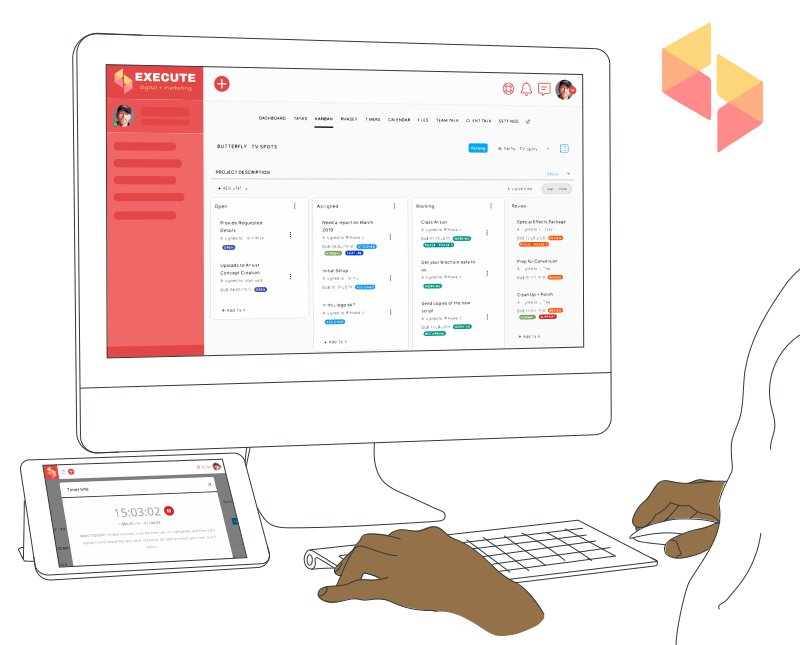
What Does Proposal Software Do?
Most proposal platforms handle six core functions. Understanding what each does helps you evaluate whether dedicated proposal software makes sense for your business.
1. Proposal Template Creation
Build reusable templates with your branding, standard sections, and dynamic pricing fields. Templates ensure consistency across your team. Instead of starting from scratch each time, select a template, customize for the prospect, and send. New team members produce professional proposals on day one.
Why it matters: Templates ensure consistency across your team and eliminate the hours spent formatting each proposal from scratch.
2. Dynamic Pricing & Estimates
Create line-item pricing with quantities, rates, discounts, and taxes. Calculations update automatically. Present multiple pricing options in one proposal so prospects can choose the tier that fits their budget without requiring a separate conversation.
Why it matters: Dynamic pricing eliminates manual calculation errors and lets prospects see exactly what they’re paying for with complete transparency.
3. E-Signature Integration
Prospects accept proposals with legally binding electronic signatures. No printing, scanning, or mailing. Track signature status in real-time. Know exactly when a proposal was signed and by whom, with a complete audit trail.
Why it matters: E-signatures reduce acceptance time from days to minutes and remove friction from the closing process.
4. Proposal Tracking & Analytics
Know when proposals are opened, how long prospects spend on each section, and which sections get revisited. Follow up at the right moment. Analytics reveal which proposal elements drive acceptance and which cause hesitation.
Why it matters: Tracking tells you when to follow up and what to address, turning guesswork into data-driven sales conversations.
5. Client-Facing Presentation
Proposals render as professional, branded documents. Clients view on any device. Interactive elements let clients select options and approve. The presentation reflects your brand quality and professionalism.
Why it matters: First impressions matter. A polished, interactive proposal signals professionalism and builds client confidence in your services.
6. Approval Workflows
Internal approval chains before proposals reach clients. Manager review, legal sign-off, pricing approval — all tracked in one system. Ensure every proposal meets your standards before it represents your business.
Why it matters: Approval workflows prevent pricing errors, ensure compliance, and maintain quality control across your entire team.
Why This Integration Matters
Proposals connected to CRM, projects, invoicing, email marketing, and automation in one platform. Accepted proposals become projects and invoices automatically. Client data flows from CRM into proposals without re-entry. One interface. One shared data layer. Complete lifecycle from proposal to payment.
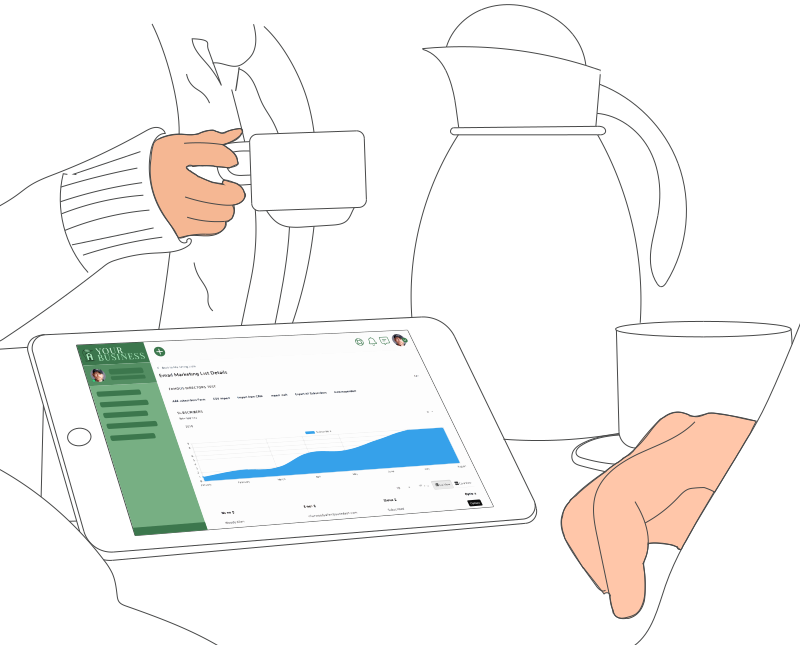
Who Uses Proposal Software?
Proposal software is valuable wherever businesses need to present pricing, scope, and terms to prospects before closing deals. Certain industries benefit dramatically.
Agencies & Consultants send proposals for every new engagement. Marketing agencies, management consultants, and strategy firms need to present scope, deliverables, and pricing professionally. Proposal software ensures consistent branding across all client-facing documents and tracks which proposals are pending, accepted, or expired.
IT & Technology Services present complex technical proposals with detailed scope, milestones, and pricing tiers. Managed service providers, software development firms, and IT consultancies need proposals that communicate technical solutions in business-friendly language with clear pricing structures.
Construction & Trades (contractors, HVAC, electricians, plumbers) create estimates and proposals for every job. Accurate pricing with materials, labor, and markup calculations is essential. Proposal software automates these calculations and presents them professionally to homeowners and general contractors.
Professional Services (law, accounting, wealth management) deliver engagement letters and service proposals that define scope, fees, and terms. Proposal software ensures compliance with industry standards while maintaining a professional presentation that builds client trust.
Creative & Design (graphic design, web design, video production, photography) present project proposals with visual examples, phased deliverables, and revision policies. Proposal software helps creative professionals present their work and pricing in a format that matches their brand quality.
Managed Service Providers send recurring service proposals with tiered pricing, SLA terms, and ongoing maintenance agreements. Proposal software handles complex pricing structures with monthly recurring fees, setup costs, and optional add-ons in a single professional document.
Proposal Volume Matters
Low volume (1-5 proposals/month) may not justify dedicated proposal software. Simple templates in Word or Google Docs can work when you’re sending a few proposals to familiar clients.
Medium volume (5-20 proposals/month) benefits significantly from templates, tracking, and e-signatures. When multiple team members create proposals, consistency and brand standards become critical.
High volume (20+ proposals/month) requires approval workflows, content libraries, analytics, and automation. At this scale, every minute saved per proposal compounds into significant time and revenue gains.
If your business sends proposals or estimates to close deals, proposal software adds value. The higher your proposal volume or the more complex your pricing, the more valuable dedicated proposal tools become.
Proposal Software vs. Standalone Tools
Standalone proposal tools like PandaDoc, Proposify, and Better Proposals are powerful for creating and sending proposals. They also create friction when proposals need to connect with CRM, projects, and invoicing.
The Problem with Standalone Proposal Tools
A marketing agency uses PandaDoc for proposals. Here’s what happens when a proposal is accepted:
- Create the proposal in PandaDoc with client details copied from CRM
- Switch to CRM to update the deal status after acceptance
- Switch to project management tool to create the project manually
- Switch to invoicing tool to create invoices based on proposal pricing
- Switch to email tool to send onboarding communications
Result: Manual data transfer between tools. Client information re-entered multiple times. Proposal pricing doesn’t automatically flow to invoices. Project scope doesn’t match what was proposed. Team spends 20 minutes per accepted proposal on administrative handoffs.
The SuiteDash Approach
Proposals plus CRM plus projects plus invoicing plus email marketing, all in one interface, all sharing the same customer database.
When a proposal is accepted, a project is created automatically with scope from the proposal. Invoicing pulls pricing directly from accepted line items. Welcome emails trigger automatically. Nobody switches tools or re-enters information.
One interface. One shared data layer. Complete lifecycle from proposal through project delivery through final invoice.
Why Integration Matters
Standalone proposal tools like PandaDoc and Proposify are powerful for teams that only need proposal creation. They excel when proposals are your only pain point and everything else is handled.
For small-to-mid-market service businesses, agencies, and consultants, the integration advantage often outweighs proposal tool specialization. You’re not optimizing one function (proposals). You’re optimizing the entire business (proposal through project delivery through billing).

What to Look For in Proposal Software
When evaluating proposal software, look for these capabilities:
Template Builder
Create reusable proposal templates with drag-and-drop editors. Define standard sections, placeholder content, and dynamic fields that auto-populate with client data. Templates ensure every proposal maintains your brand standards regardless of who creates it.
Dynamic Pricing
Build line-item pricing tables with quantities, unit rates, discounts, and tax calculations. Totals update automatically as clients select options. Present clear, professional pricing that eliminates manual calculation errors.
E-Signature
Let prospects accept proposals with legally binding electronic signatures directly within the document. Track signature status, send reminders, and maintain a complete audit trail for compliance and record-keeping.
Proposal Analytics
Track when proposals are opened, how long prospects spend reviewing, which sections they revisit, and when they share with colleagues. Use engagement data to time your follow-ups and address specific concerns.
Brand Customization
Customize proposals with your logo, brand colors, fonts, and imagery. White-label the entire experience so proposals look like a natural extension of your brand, not a third-party tool output.
Multiple Pricing Options
Present good-better-best pricing tiers within a single proposal. Let prospects compare options side-by-side and select the package that fits their budget. Interactive pricing increases average deal size by making upsells visible.
Content Library
Store reusable content blocks — case studies, team bios, service descriptions, testimonials, and terms — in a central library. Drag pre-approved content into any proposal without rewriting or searching through old documents.
Approval Workflows
Route proposals through internal review before they reach clients. Set up manager approval, legal review, or pricing sign-off stages. Track where each proposal is in the approval chain and who needs to act next.
CRM Integration
Pull client data directly from your CRM into proposals. Contact details, company information, and deal context populate automatically. When a proposal is accepted, the CRM record updates without manual entry.
Automated Follow-Up
Schedule automatic follow-up emails when proposals haven’t been opened or responded to. Set reminder sequences that nudge prospects at the right intervals without requiring manual tracking or calendar reminders.
Mobile-Responsive
Proposals render professionally on any device — desktop, tablet, or phone. Prospects review and accept proposals from wherever they are, without formatting issues or broken layouts that undermine your professionalism.
Payment Collection
Collect deposits or full payments at the moment of proposal acceptance. Integrate payment processing so clients can approve and pay in one seamless action, reducing the gap between acceptance and revenue.
SuiteDash includes all 12 of these capabilities. Additionally, the same platform provides CRM, projects, invoicing, email marketing, automation across modules, client portals, and file sharing. You’re not building a tool stack. You’re using one integrated system.
How to Choose Proposal Software
1. Evaluate Your Proposal Volume
Low volume (1-5/month): Simple templates in Word or Google Docs may suffice. Dedicated software adds overhead without proportional benefit.
Medium volume (5-20/month): Templates, tracking, and e-signatures pay for themselves quickly. Time saved per proposal multiplied by volume creates significant ROI.
High volume (20+/month): Approval workflows, content libraries, analytics, and team collaboration features become essential. Every minute saved compounds across dozens of proposals.
2. Consider Your Template Complexity
Simple proposals: Fixed pricing, standard scope, minimal customization. Basic template tools handle this well.
Moderate proposals: Variable pricing, multiple service options, some customization per client. Dynamic pricing and content libraries add significant value.
Complex proposals: Custom scope, tiered pricing, legal terms, multiple approval stages, and detailed deliverables. Full-featured proposal software with approval workflows and content management is essential.
3. Assess Your Integration Requirements
Proposals only: If you only need proposal creation and sending, a standalone tool like PandaDoc or Proposify works. You’re optimizing one function deeply.
Proposals + CRM + projects: If accepted proposals need to flow into projects and invoicing, an integrated platform eliminates manual handoffs and data re-entry.
Full lifecycle: If you need proposals connected to CRM, projects, invoicing, email marketing, and automation, an all-in-one platform like SuiteDash eliminates tool sprawl entirely.
4. Compare Total Cost of Ownership
Standalone proposal tools: PandaDoc ($35-65/month per user), Proposify ($49-590/month depending on tier), Better Proposals ($19-29/month per user). Most teams need 2-5 users.
Integrated platform: SuiteDash connects Proposals and Estimates with CRM, Contracts, Projects and Invoicing. Plans include unlimited Staff and Clients; see current plan prices on Plans & Pricing.
ROI calculation: Most teams spend $200-500/month on separate proposal, CRM, project, and invoicing tools. SuiteDash ($14-69/month) replaces most of those.
5. Evaluate Implementation and Training Time
Complex proposal tools (PandaDoc Business): 2-4 weeks for full setup including template creation, workflow configuration, and team training.
Mid-market tools (Proposify): 1-2 weeks. Learning curve is moderate. Most teams send their first proposal within days.
Integrated platform (SuiteDash): 1-2 weeks. Create your first proposal template and start sending. CRM, projects, and invoicing are ready when you need them.
Faster implementation means faster ROI. The sooner your team sends professional proposals, the sooner you see improved close rates.
SuiteDash’s Approach to Proposals
SuiteDash’s proposal system isn’t positioned as a standalone document editor competing feature-for-feature with PandaDoc. SuiteDash’s proposals have a different philosophy: integration across your entire business workflow for small-to-mid-market service businesses.
1. CRM-Connected Proposals
Proposals pull client data directly from your CRM. Contact details, company information, and deal context populate automatically. No copying client names and addresses from one tool to another.
When a prospect becomes a client, their entire history is already in the system. The proposal they accepted, the terms they agreed to, the pricing they chose — all connected to their CRM record permanently.
2. Proposals Become Projects
When a client accepts a proposal, SuiteDash can automatically create a project with the scope, deliverables, and timeline from the proposal. No manual project setup. No re-entering what was already defined in the proposal.
Invoicing pulls pricing directly from the accepted proposal. The numbers your client agreed to become the numbers on their invoice. No discrepancies. No manual data transfer.
3. Full Lifecycle Automation
When a proposal is accepted, trigger actions across your entire business simultaneously. Create a project. Generate an invoice. Send a welcome email. Enroll the client in an onboarding sequence. Update the CRM record. All from one automation.
No integration required. No middleware. One workflow from proposal acceptance through project delivery through final payment.
Real Example
A marketing agency receives a request for proposal. In traditional systems, the team manually: looks up the client in CRM, opens the proposal tool, copies client details, builds pricing from scratch, sends for review, waits for acceptance, then manually creates a project in a separate tool, sets up invoicing in another tool, and sends a welcome email from yet another tool.
In SuiteDash, the proposal pulls client data from CRM automatically. Templates populate with the right branding and standard terms. Dynamic pricing calculates totals. The client reviews and signs electronically. Acceptance triggers a workflow that creates the project, generates the first invoice, and sends the onboarding email — all automatically.
All happens instantly. No manual switching. No data re-entry. No mismatched pricing between proposal and invoice.
This is what integrated proposals mean. It’s not just creating pretty documents. It’s connecting proposals to every downstream process so acceptance triggers action across your entire business.
Proposal Software: Frequently Asked Questions
What is proposal software?
Proposal software helps businesses create, send, track, and close professional proposals and estimates. It replaces manual document creation with templates, dynamic pricing, e-signatures, and analytics. Proposal tools standardize your sales documents, ensure consistent branding, and provide visibility into which proposals are pending, viewed, or accepted. Most proposal platforms include template builders, content libraries, electronic signature capabilities, and tracking dashboards that show when prospects open and engage with your proposals.
What are the core features of proposal software?
Essential proposal features include template creation, dynamic pricing tables, e-signature integration, proposal tracking and analytics, brand customization, and content libraries. Advanced proposal tools add approval workflows, multiple pricing tiers, CRM integration, automated follow-up sequences, mobile-responsive viewing, and payment collection at acceptance. The right feature set depends on your proposal volume, pricing complexity, and whether you need proposals connected to CRM, projects, and invoicing.
Why do businesses need proposal software?
Proposal software eliminates the inefficiency of creating proposals from scratch in Word or Google Docs. Without dedicated software, proposals are inconsistent, pricing errors go unnoticed, and tracking whether prospects opened your proposal requires manual follow-up. Proposal software standardizes your sales documents, automates pricing calculations, provides e-signature capabilities, and gives visibility into proposal engagement. For growing teams, it ensures every proposal maintains brand standards regardless of who creates it.
What’s the difference between proposal software and a Word template?
A Word template is a static document you fill in manually. Proposal software adds dynamic pricing (calculations update automatically), e-signatures (clients accept digitally), tracking (know when proposals are opened), content libraries (reusable sections), and analytics (engagement data across all proposals). Word templates require manual formatting, separate signature tools, and provide zero visibility into whether prospects are engaging with your proposal.
How does proposal software improve close rates?
Proposal software improves close rates through professional presentation, faster delivery, and data-driven follow-up. Templates reduce creation time from hours to minutes, so proposals reach prospects while interest is high. E-signatures remove friction from acceptance. Analytics show when prospects engage, enabling timely follow-up. Multiple pricing tiers increase average deal size by making upsells visible. Teams using proposal software typically see 20-30% faster proposal turnaround and measurable improvements in win rates.
What’s the typical cost of proposal software?
Evaluate proposal software by the complete path from draft to Client approval and delivery. SuiteDash keeps that path connected to the same Client record and the tools your team uses after a proposal is accepted.
How long does it take to implement proposal software?
Most proposal software can be set up and sending proposals within 1-2 weeks. Template creation takes the most time — building your first 3-5 templates with branding, standard sections, and pricing structures. E-signature setup and CRM integration typically take a few hours each. Team training is minimal since most proposal tools use drag-and-drop editors. SuiteDash proposals can be configured alongside CRM, projects, and invoicing in the same implementation window, so you’re not setting up multiple tools sequentially.
What industries benefit most from proposal software?
Any business that sends proposals or estimates to close deals benefits from proposal software. High-value industries include agencies and consultants, IT and technology services, construction and trades, professional services (law, accounting), creative and design firms, and managed service providers. Industries with complex pricing (multiple tiers, custom scoping, variable rates) see the most dramatic value. Businesses sending 10+ proposals per month benefit significantly from templates, tracking, and automation.
Can proposal software work for small teams or solo freelancers?
Yes, and solo freelancers often see the most immediate ROI. A freelancer sending 5-10 proposals per month saves hours by using templates instead of building each proposal from scratch. E-signatures eliminate the print-sign-scan cycle. Tracking shows when clients open proposals so you know when to follow up. Small teams (2-5 people) benefit from consistent branding and approval workflows. The key question: Are you spending more than 30 minutes creating each proposal? If yes, proposal software adds value regardless of team size.
How does proposal software integrate with other business tools?
Most proposal platforms integrate with CRM tools (Salesforce, HubSpot), payment processors (Stripe, PayPal), and e-signature providers. They also offer Zapier integration for connecting to other apps. Integration depth varies — some synchronize client data in real-time, while others require manual syncing. All-in-one platforms like SuiteDash eliminate integration complexity because CRM, projects, invoicing, and email marketing are all in one system. Proposals automatically connect to every other module without configuration.
See How Proposals Connect with SuiteDash
Proposals are one piece of the integrated SuiteDash platform. Explore how they work with other modules:
Proposals + CRM — Pull client data from CRM into proposals and update deal status when proposals are accepted.
Proposals + Invoicing — Accepted proposal pricing flows directly into invoices without re-entering line items.
Proposals + Projects — Accepted proposals automatically create projects with scope and deliverables already defined.
Proposals + Automation — Trigger workflows when proposals are sent, viewed, accepted, or expired across all modules.