How to Consolidate CRM, Invoicing and Project Management Into One Platform (2026)
Nobody Chose This Stack — It Accumulated
Almost no business sits down and designs a six-tool stack. It arrives one sensible decision at a time. You needed invoicing, so you got FreshBooks. A client wanted a shared project space, so you added Basecamp. Sales got complicated enough to need a pipeline, so a CRM appeared. Then a scheduler, a file-sharing account, an e-signature tool, and something to connect a few of them together.
Every one of those was the right call in isolation. The problem is not any individual tool — most of them are excellent at the job they were bought for. The problem is that the work has quietly moved into the gaps between them, and nobody owns those gaps.
You can tell it has happened when the symptoms show up. The same client exists in three systems with three slightly different billing addresses. A deal closes and someone manually creates the project, then manually creates the invoice. An automation breaks because a vendor changed an API, and you find out when a client asks why they never received something. Onboarding a new client is a checklist a human works through rather than something the software does.
That is the real cost, and it is not on any invoice.
What the Stack Actually Costs, With Real Numbers
It is worth doing this arithmetic properly rather than hand-waving, because the answer surprises people in both directions.
Take a five-person consultancy running a fairly typical setup. Basecamp is flat-rate with no per-user fees — genuinely good pricing — at $25 for 3 projects, $59 for 10, $99 for 25, or $299 per month billed annually for unlimited. Call it $59 for the Studio plan. FreshBooks is $23, $43 or $70 per month depending on tier, plus $11 per month for each additional team member; five people on the Plus plan is $43 plus four extra seats at $11, so $87. A CRM on top — HubSpot’s Starter customer platform at $20 per seat standard — is $100 for five seats.
That is roughly $246 per month before you have paid for scheduling, e-signature, file sharing, a client portal, or the automation service connecting them. Realistically the same business is at $300–$400.
Two honest observations. First, none of those vendors is overcharging; that is a fair price for what each delivers. Second, the subscription total is the smaller half of the cost. The larger half is the hour a week someone spends reconciling records, the duplicated data entry after every closed deal, and the integration maintenance nobody scheduled.
The reason consolidation is worth considering is not that $246 is outrageous. It is that most of what you are paying for is the same client record, stored five times.
What Consolidation Has to Mean to Be Worth Doing
Here is where most “all-in-one” advice goes wrong. Replacing five tools with one bundle of five loosely-joined modules solves the billing problem and none of the actual problems. If each module keeps its own copy of the client and something syncs between them, you have moved the seams inside the vendor rather than removing them.
The distinction that matters is whether the capabilities share a single shared data layer — one place where the data for your customers, your staff and your operations lives, so every module reads the same record rather than its own copy.
The practical test is what happens when a deal closes. On a genuinely unified platform the project, the invoice and the onboarding sequence follow automatically, with nothing configured between vendors, because there is no vendor boundary to cross. On a bundle, you are still wiring things together — just inside one login.
That single structural difference is what decides whether consolidation is a cost saving or an actual change in how the week goes. A contact created in the CRM being immediately available to Invoicing, Scheduling, Drip Sequences and the client portal is not a feature; it is a consequence of there being one record.
Replacing Basecamp, FreshBooks and a Separate CRM
If that is your stack specifically, here is the honest mapping — including where you would lose something.
Basecamp gives you project spaces, message boards, to-dos and a genuinely excellent client-facing simplicity. Its philosophy is deliberate calm, and that is a real product virtue. What replaces it needs project management, task management and a place clients can log into. What you would give up is Basecamp’s opinionated restraint — broader platforms have more surface area, and some teams find that itself a cost.
FreshBooks gives you invoicing, expenses, time tracking and accounting-grade reporting. What replaces it needs invoicing and billing, estimates, recurring payments and time tracking. What you would give up is depth of bookkeeping: FreshBooks is an accounting product, and if your accountant works inside it, that relationship matters more than consolidation does. Most businesses that consolidate keep a bookkeeping tool and move the client-facing billing.
A separate CRM gives you pipeline, deal stages and reporting. What replaces it needs a CRM with deals and a sales pipeline. What you would give up is forecasting sophistication — a dedicated sales CRM will always go deeper than a CRM inside a broader platform.
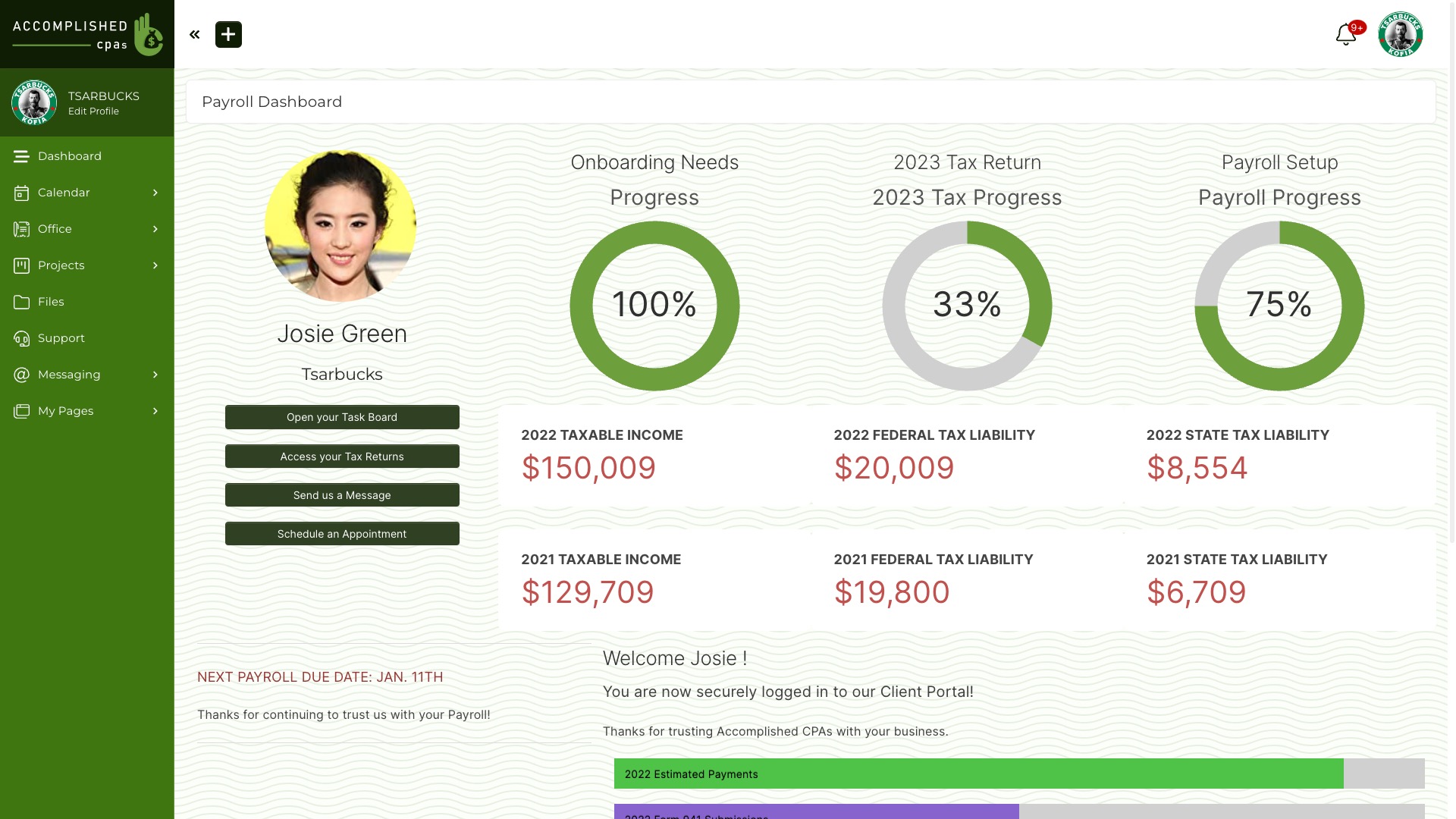
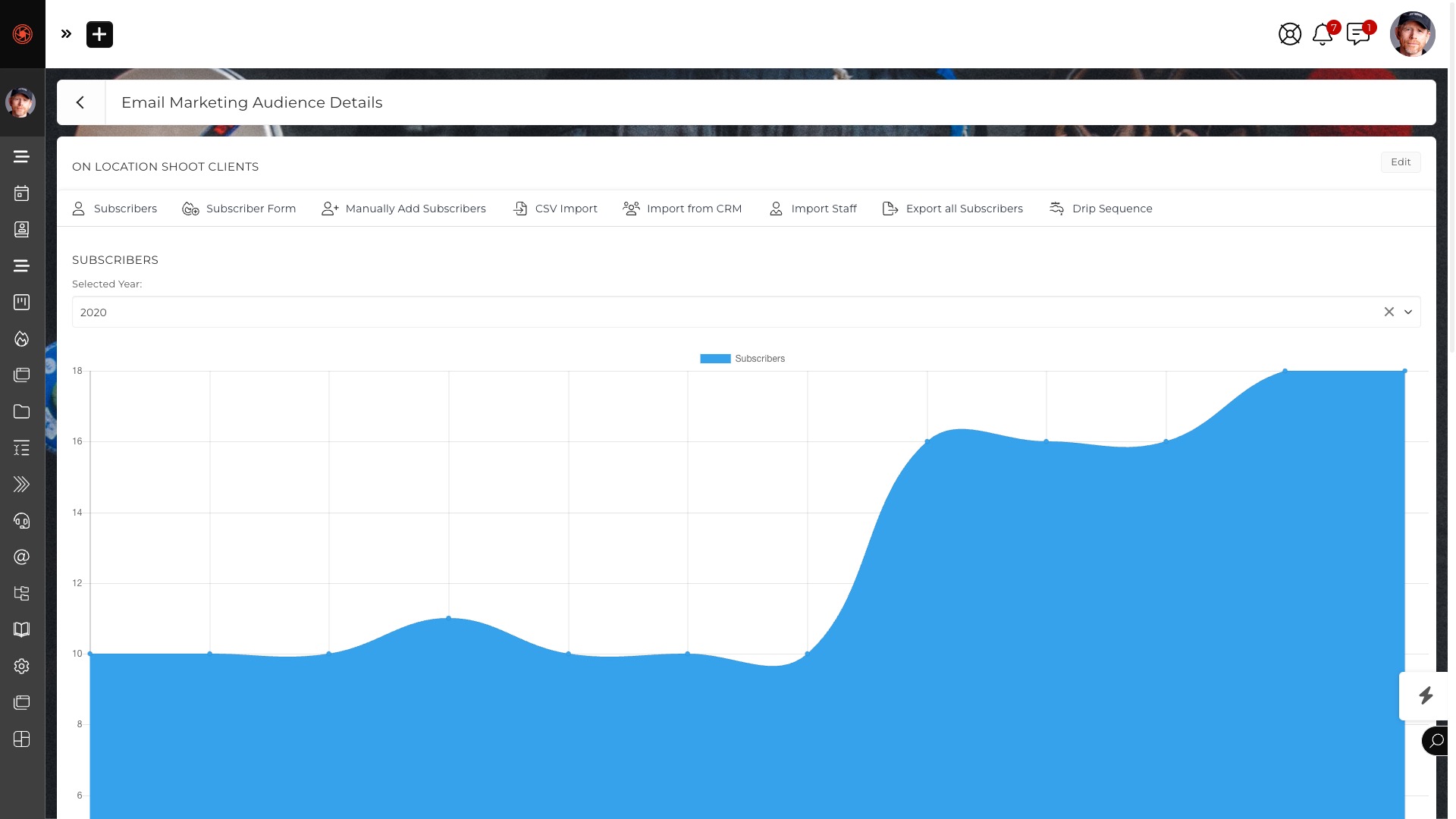
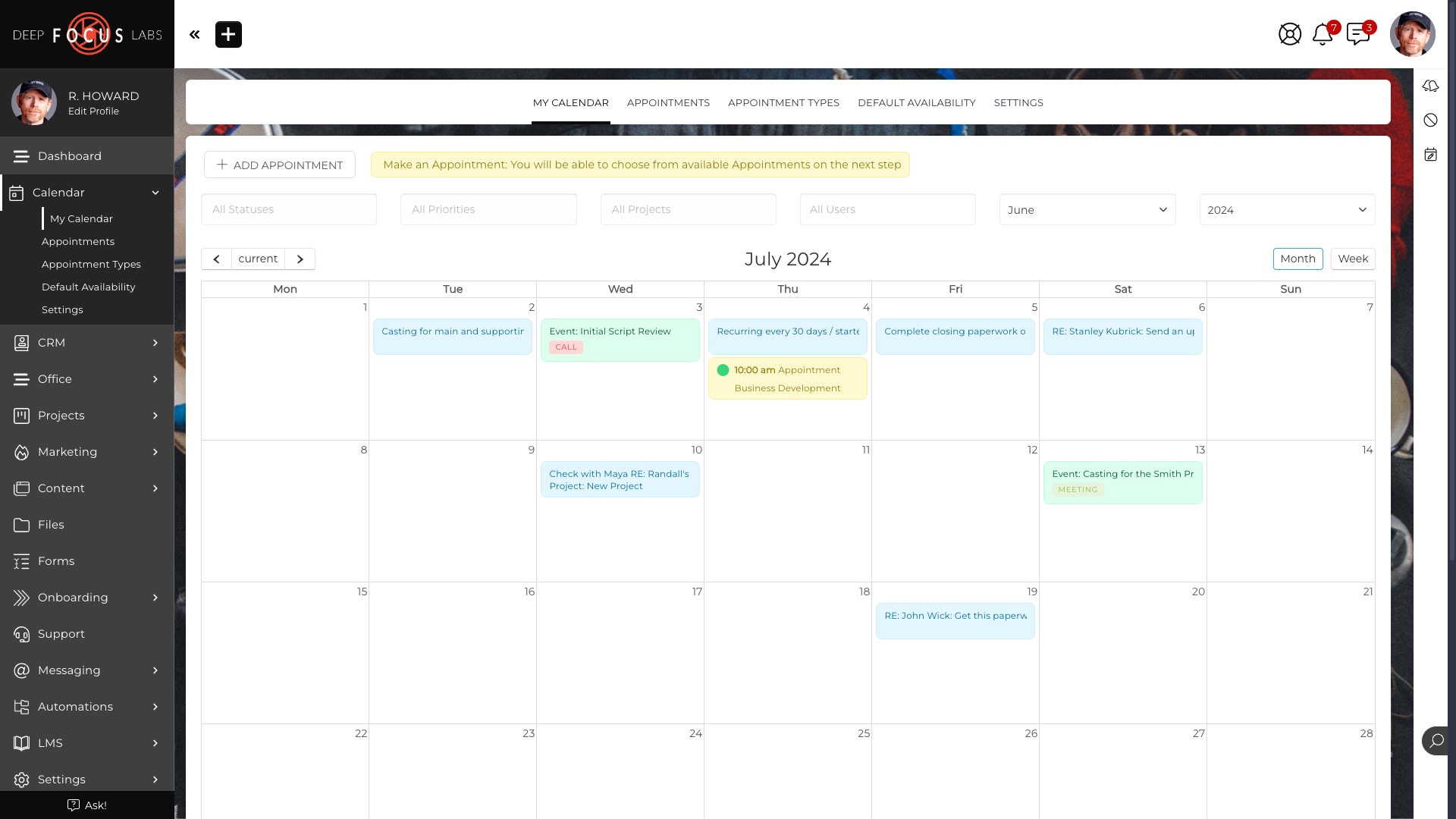
SuiteDash covers all three natively rather than as integrations, alongside Client Portal, Client Onboarding, Project Management, Task Management, Time Tracking, Invoicing and Billing, Estimates, Proposals, Contracts, Subscriptions and Recurring Payments, Service Subscriptions, Deals and Sales Pipeline, Appointment Scheduling, Email Marketing and Drip Sequences, Forms, Automation and FLOWs, Documents and eSigning, File Exchange, Support Tickets, Secure Messaging, Live Chat, a Learning Management System, Dashboards and Portal Pages, the Content Block Editor, Reporting and Analytics, and Translation and Localization — on one shared data layer, flat rate with unlimited users at $19, $49 or $99 per month.
For the five-person consultancy above, that is $49 or $99 against roughly $246, and the four extra people cost nothing. Don’t do this if your accountant lives in FreshBooks and will not move, or if Basecamp’s simplicity is the thing your team actually values — consolidation is not automatically an upgrade.
Automating Client Onboarding From Proposal to Invoice
This is the payoff that justifies consolidation more than the cost saving does, and it is the thing a stack genuinely cannot do well.
In a stack, the sequence after a client says yes looks like this: someone marks the deal won in the CRM, copies the client into the project tool, creates the project from a template, copies them again into the invoicing tool, sets up the payment schedule, emails a welcome pack, and shares a folder. Six manual steps, each a place to forget something, all performed by a person whose time is worth more than that.
On a unified platform the signed proposal is the trigger. Because the contact, the project, the invoice and the portal all reference the same record, an automation can create the project from a template, generate and send the invoice, start the onboarding email sequence, provision the client’s portal login and share the right files — without a connector in the middle, and without anyone re-typing a name.
SuiteDash calls these FLOWs, and they fire from triggers across the whole platform: form submissions, proposal signatures, invoice payments, appointment bookings, project completions and deal-stage changes. The important part is not the branding but the structural fact underneath it — an automation cannot break at an integration seam when there is no seam, and there is no per-task fee or connector subscription sitting on top.
If You Are a Solo Consultant or Freelancer
The advice changes at this end of the market, and it would be dishonest to pretend otherwise.
If you are one person with fewer than about ten active clients, a stack is not necessarily costing you much. Two or three well-chosen tools can be cheaper than a broad platform, and the reconciliation burden that makes stacks painful scales with headcount and client count — with one of each, it is small.
What changes the calculation for a solo operator is usually one of three things. The first is client experience: if you want clients logging into something that looks like your business rather than receiving PDFs by email, you need a portal, and bolting one onto a stack is the expensive path. The second is time: when you are the salesperson, the deliverer and the bookkeeper, the six manual steps above are your evening. The third is growth: the moment you add a contractor or a virtual assistant, per-seat tools start multiplying and flat pricing stops being theoretical.
If none of those three apply, keep your stack — genuinely. If one does, the entry point is low: SuiteDash Start is $19 per month with unlimited users, and there is a 14-day free trial with full Pinnacle features and no credit card required, which is enough to run one real client end to end before deciding.
Migrating Without Losing a Month
Consolidate in the order the work flows
Move the client record first, then the thing that happens after a deal closes, then billing. Trying to move everything in one weekend is how businesses end up running two systems badly for a quarter.
Run one live client end to end before moving anything else
Not a test account — a real engagement, from intake through invoice. Every platform looks complete in a demo; the gaps only appear against a real deadline.
Keep the accounting tool until year end
Billing and bookkeeping are different jobs. Moving client-facing invoicing is straightforward; moving your books mid-year rarely repays the disruption, and your accountant will have views.
Rebuild automations rather than porting them
Workflow logic never transfers between platforms because each models it differently. The rebuild is usually faster than the analysis of how to avoid it, and it is a good moment to delete the three automations nobody remembers writing.
Overlap for one billing cycle
Pay for both for a month. It is the cheapest insurance available against discovering something did not come across.
Common Questions
How do I consolidate my CRM, invoicing and project management into one tool?
Choose a platform where those three are native capabilities on a shared data layer rather than separate modules that sync, then migrate in workflow order: client records first, post-sale delivery second, billing third. Run one live client end to end before moving the rest, and keep your old tools running for one billing cycle. The test for whether a platform is genuinely unified is what happens when a deal closes — if the project and invoice follow without you configuring anything between systems, it is one system.
What software can replace Basecamp, FreshBooks and a separate CRM?
You need project management, client-facing collaboration, invoicing, recurring billing, time tracking and a sales pipeline in one place. SuiteDash covers all of these natively at $19, $49 or $99 per month with unlimited users. Expect to keep a bookkeeping tool if your accountant works inside FreshBooks, and expect less forecasting depth than a dedicated sales CRM. For a five-person team the stack above runs roughly $246 per month before scheduling, e-signature and portal tools.
Is an all-in-one platform good for a solo consultant or freelancer?
Sometimes. If you have a handful of clients and no team, two or three tools may genuinely be cheaper and simpler. It becomes worth consolidating when you want clients logging into a branded portal, when manual onboarding is eating your evenings, or when you start adding contractors and per-seat costs begin to multiply. Entry pricing is $19 per month with unlimited users and a 14-day trial with no credit card, so the test is cheap.
Will I lose features by consolidating?
Yes, in specific places, and it is worth being clear-eyed about which. A dedicated tool with one job usually goes deeper than a module inside a broader platform — accounting depth, funnel building and sales forecasting are the usual examples. What you gain is that the work between the tools disappears: one client record, one permission model, one automation engine and one export at compliance time. For most small and medium businesses that trade is strongly favourable, because the time lost at the seams exceeds the depth gained in any one tool.
How long does consolidating actually take?
Most businesses move in two to four weeks, working one layer at a time, with a one-month overlap on the old subscriptions. The data migration is rarely the hard part — contacts, projects and invoice history export and import cleanly. Rebuilding templates and automation logic is what takes the time, because it has to be redone rather than transferred.
Does one platform mean one point of failure?
It means one vendor relationship instead of six, which cuts both ways and deserves an honest answer. The mitigation worth asking about is exportability: whether you can get your data out in a usable form. The counterweight is that a stack has six points of failure plus the connectors between them, and an integration breaking silently is a far more common event than a platform going down. SuiteDash launched in 2015, is bootstrapped and profitable, and holds a 4.8 out of 5 rating across 633 verified customer reviews on Capterra.