Best All-in-One Business Management Software for Small Businesses (2026)
What “All-in-One” Should Actually Mean
Search for all-in-one business management software and every result claims the title. HubSpot says it. Monday.com says it. Bitrix24, Flowlu, Bonsai and a dozen others say it. The phrase has been used so widely that it no longer tells a buyer anything useful, which is a problem if you are the one trying to choose.
The honest version of the question is not does this platform do many things. Almost all of them do. The question is how tightly those things are bound to each other, because that single structural difference decides what your week actually looks like: whether a signed proposal turns into a project and an invoice on its own, or whether you spend Thursday afternoon working out why the invoicing tool never heard about the deal that closed on Tuesday.
Some platforms are a set of capabilities running on one shared data layer. Others are a set of separate applications, loosely stitched together with connectors, sold under one banner. Both get called all-in-one. Only one of them behaves like it.
Tightly Bound, or Loosely Stitched
The stitched-together stack
The common setup is a CRM from one vendor, invoicing from another, project management from a third, a scheduling tool, a file-sharing service, an email marketing platform, and an automation service in the middle paying for the privilege of introducing them to each other. Each piece is good. The seams between them are where the work leaks out.
Nothing about this is stupid. It is how most businesses arrive at their stack — one sensible decision at a time, over several years. But the result is a hodgepodge held together with connectors, and every seam is a place where data can disagree with itself.
What a shared data layer changes
SuiteDash takes the other approach. It is a native toolkit business operating system built on a single shared data layer — one source of truth where the data for your customers, your staff and your operations all lives in the same place. The modules are not separate products introduced to each other by an integration. They are first-class parts of one system that were designed together.
That is not a marketing distinction. It changes what is possible and what is impossible, and the rest of this page is about which.
What Breaks in a Stitched-Together Stack
Your client record quietly splits in two
The same client exists in the CRM, in the invoicing tool, and in the project system. Three records, three sources of truth. Someone updates a billing address in one place. Weeks later an invoice goes to the old address, and nobody can say which record was right, because all three were right in their own system.
Automations break when somebody else ships
An automation that spans four vendors depends on four companies not changing anything. They will. An API version is deprecated, a field is renamed, a rate limit tightens, and a workflow that ran reliably for a year stops — usually silently, and usually noticed when a client asks why they never received something.
The seat maths compounds twice
Per-user pricing is manageable with one tool. With eight, every new hire multiplies across the whole stack, and so does every contractor and every part-time bookkeeper. The cost grows on two axes at once, which is why stacks that felt affordable at three people feel punitive at twelve.
Compliance day arrives
When a client asks what data you hold on them, or an auditor asks who had access to what, the answer lives in eight systems with eight permission models and eight export formats. The work is not hard. It is just spread across a fragile, teetering arrangement that nobody documented.
What a Single Shared Data Layer Changes
There is no sync step, because there is nothing to sync
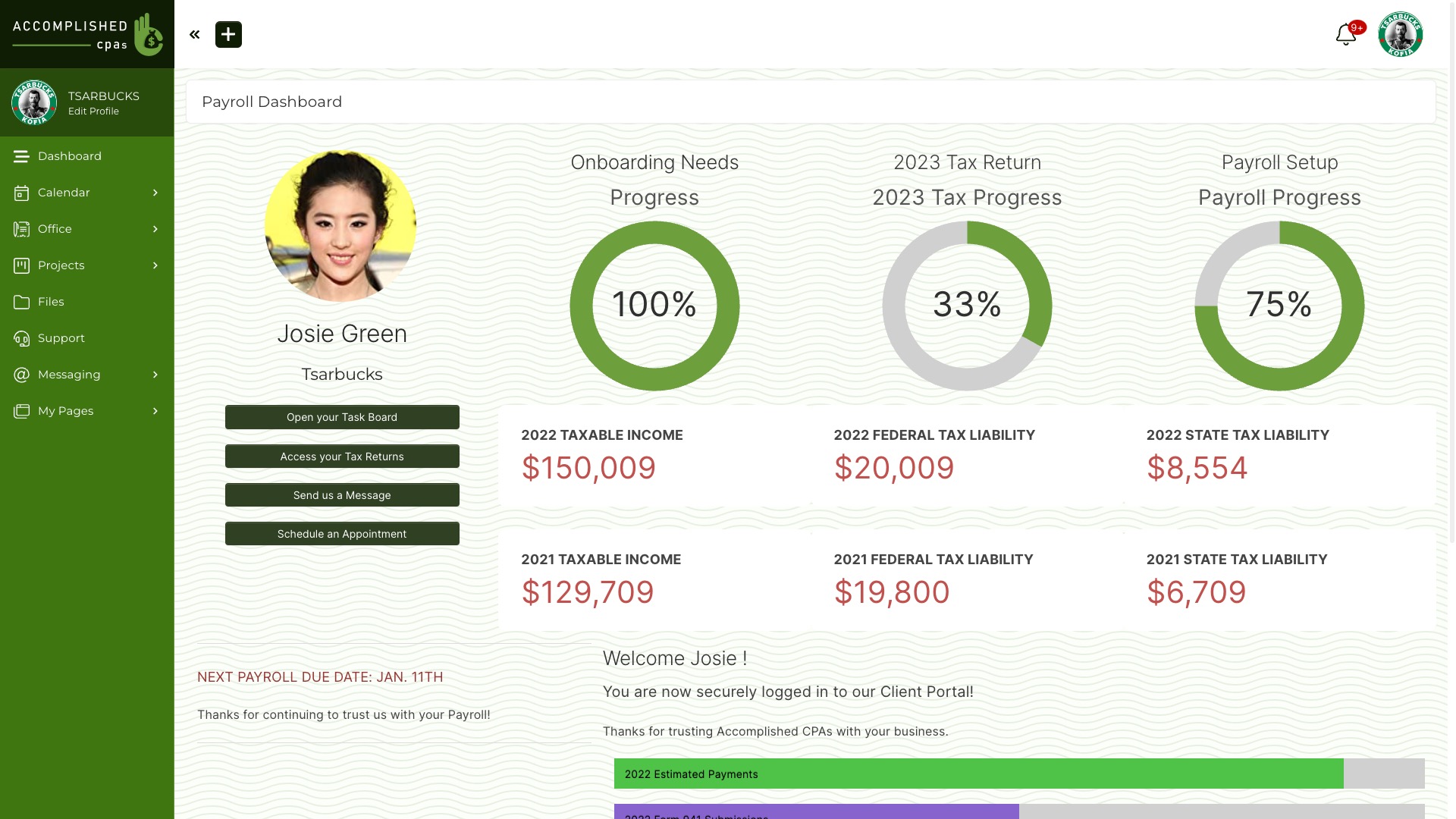
A contact created in the CRM is immediately available to Invoicing, Drip Sequences, Appointment Scheduling, the LMS and every other module. Not synced quickly — available, because it is the same record. The invoicing side already knows what the CRM knows.
One permission model instead of eight
Access is managed once, platform-wide, through Circles. You decide what a client, a contractor or a staff member can see, and that decision holds everywhere rather than being re-implemented in each tool with slightly different rules. Custom fields behave the same way: defined once, consistent across every module.
Automation that spans the whole business
Because everything shares a data layer, an automation can reach across it. FLOWs connect CRM events to Invoices, Projects, Documents, Email Cannons and Forms inside one system. Automations fire from triggers throughout the platform — form submissions, proposal signatures, invoice payments, appointment bookings, project completions, deal-stage changes — and there is no third-party connector in the middle to break, rate-limit, or bill you.
The integration work is already done
This is the part that is easy to underestimate. With a stitched stack, the integration is a project you own forever: you build it, you maintain it, you repair it when a vendor changes something. Here it shipped with the product. There is no connector to configure, no per-task fee, and nothing to fix when someone else’s API moves.
The 25+ Native Toolkits
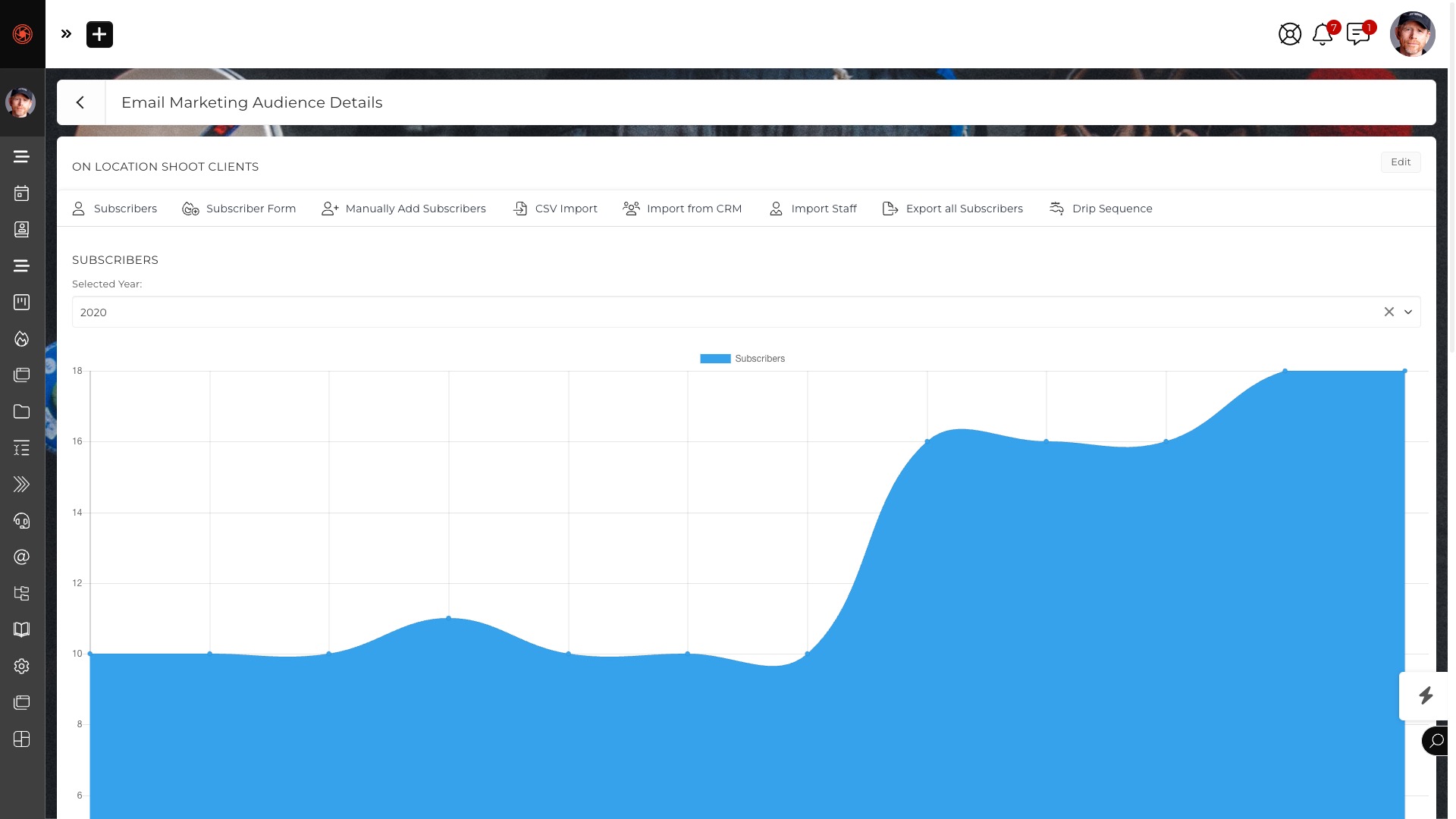
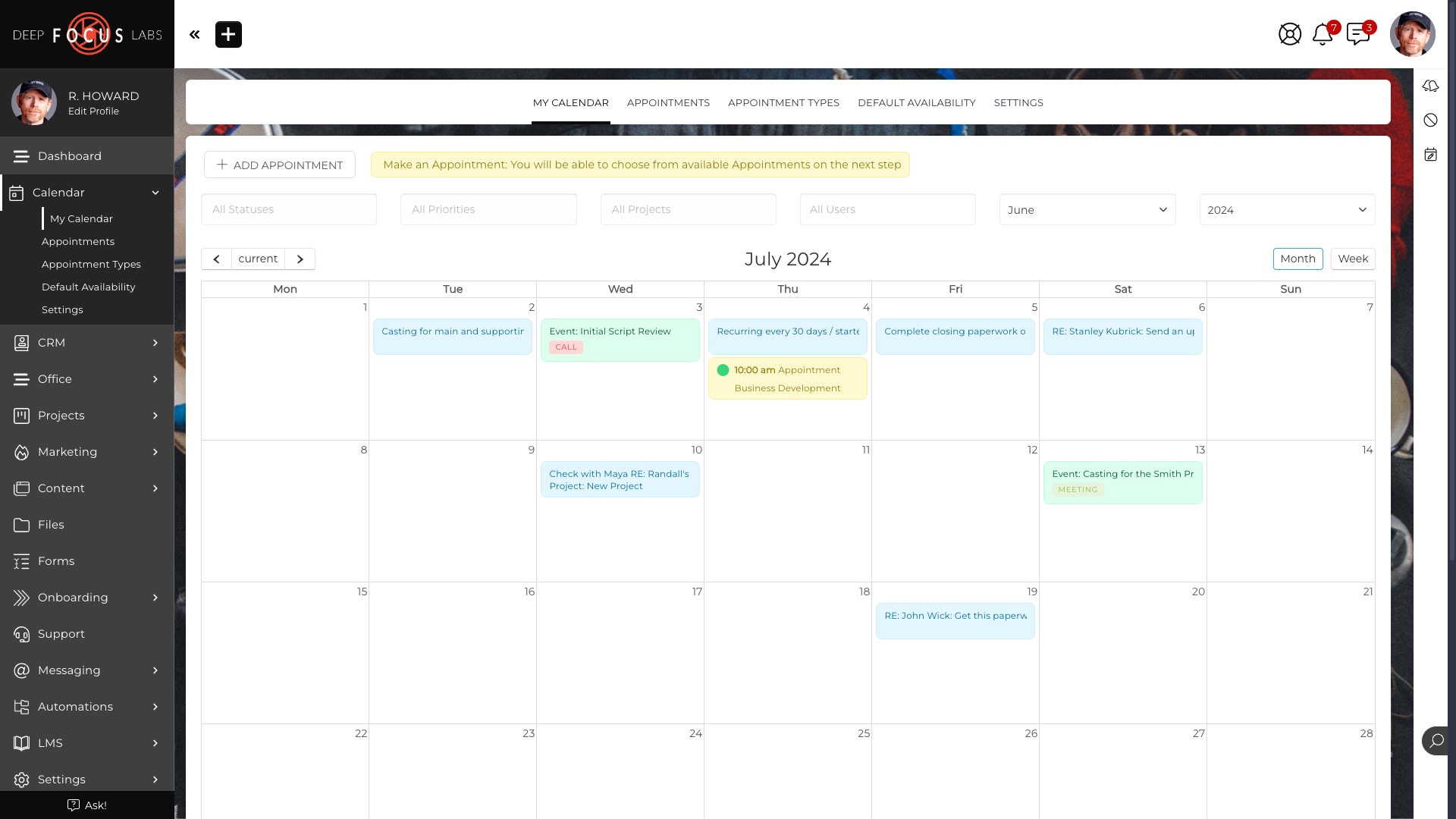
Claims about breadth are easy to make and rarely checkable, so here is the full list rather than a number. SuiteDash includes CRM, Client Portal, Client Onboarding, Project Management, Task Management, Time Tracking, Invoicing and Billing, Estimates, Proposals, Contracts, Subscriptions and Recurring Payments, Service Subscriptions, Deals and Sales Pipeline, Appointment Scheduling, Email Marketing and Drip Sequences, Forms, Automation and FLOWs, Documents and eSigning, File Exchange, Support Tickets, Secure Messaging, Live Chat, a Learning Management System, Dashboards and Portal Pages, the Content Block Editor, Reporting and Analytics, and Translation and Localization.
That is twenty-seven, and every one is a native part of the platform rather than an integration or a bolt-on. Power-Ups such as WORLDs and Community Forums are separate paid add-ons and are deliberately not counted in that total.
For most businesses the practical effect is that one subscription replaces a stack that had been spread across Basecamp, FreshBooks, Dubsado, HoneyBook, Monday.com and a separate CRM — along with the connectors that were holding them together.
Pricing Is Downstream of the Architecture
SuiteDash is flat rate with unlimited users on every plan: Start at $19 per month, Thrive at $49, and Pinnacle at $99. Adding a staff member, a contractor or a thousand clients does not change the bill.
That is not a discount, and it is worth being precise about why. Per-seat pricing exists because most platforms are sold to organisations that grow by adding seats. When your capabilities live on one shared data layer rather than in eight separate products, there is no per-tool seat to charge for — so the pricing model that follows naturally is a flat one. The architecture and the price list are the same decision viewed from two angles.
The same logic applies to pass-through services. SMS through Twilio, marketing email deliverability and AI credits are billed at cost, with no markup added. There is a 14-day free trial with full Pinnacle features and no credit card required, and lifetime plans are available at $1,990, $4,990 and $9,990.
Built for Ambitious Small and Medium Businesses
SuiteDash is purpose-built for solopreneurs and teams of roughly ten to twenty people, and it scales comfortably beyond that. The community around it is made up of ambitious small and medium businesses using technology to punch well above their weight — operators who want enterprise-grade capability without enterprise cost, enterprise procurement, or a six-month implementation.
The contrast with platforms like Monday.com, Salesforce and HubSpot is one of intent rather than capability. Those are excellent products optimised for large organisations that grow by adding seats, and they will keep doing well there. SuiteDash is optimised for the operator who is running the whole business — often the person who is also doing the sales, the delivery and the invoicing — and the flat-rate unlimited-user model is the structural proof of who it was designed for.
For larger or more complex organisations, the WORLDs Power-Up segments an account into self-contained environments with their own CRM data, assets and permissions, which is how multi-department, multi-region and contractor-heavy setups are handled without splitting into separate accounts.
White-Label Deep Enough to Resell
Most platforms that advertise white-labelling mean a logo swap and a colour picker. SuiteDash goes considerably further, which matters enormously if you are an agency putting a platform in front of your own clients.
You get a custom domain with automatic SSL, a branded login page with several layout options, and a branded mobile app delivered as a progressive web app under your own name. Notification emails send from your domain through domain-verified sending or your own SMTP. Theming runs platform-wide across dashboards, login and email, and extends to the loading animation and custom CSS.
The detail most platforms miss
The concealment holds at the DNS layer too. Rather than requiring every customer to point their custom domain at an obviously branded target — which would reveal the platform to anyone who ran a lookup — SuiteDash maintains a set of deliberately neutral domains to point at instead. Your client sees your brand in the product, and a curious visitor checking DNS records does not find the vendor behind it either.
That is what makes SuiteDash genuinely resellable rather than merely rebrandable, and it is the foundation of the SU1TE Partner Program, where partners pay wholesale rates of $14, $34 and $69 per account and set their own retail pricing.
Common Questions
What makes a platform genuinely all-in-one rather than a bundle?
Whether the modules share a data layer. If a client record exists once and every module reads the same record, the platform is genuinely unified. If each module keeps its own copy and connectors move data between them, it is a bundle — regardless of how it is sold. The practical test is what happens when a deal closes: on a unified platform the project, the invoice and the onboarding sequence follow automatically, with nothing configured between vendors.
How is SuiteDash different from Monday.com or HubSpot?
Intent, more than features. Those platforms are built for organisations that grow by adding seats, and they price accordingly. SuiteDash is built for small and medium businesses, prices flat with unlimited users, and includes client-facing capability — a branded portal, invoicing, contracts, onboarding — as native parts of the platform rather than as add-ons or integrations.
Does an all-in-one platform mean compromising on individual tools?
It is a real trade-off and worth being honest about. A dedicated tool with one job will usually go deeper in that one area than any module inside a broader platform. What you gain in return is that everything shares one data layer, one permission model and one automation engine — so the work between the tools disappears. For most small and medium businesses that exchange is strongly favourable, because the time lost at the seams exceeds the depth gained in any single tool.
Can an agency resell SuiteDash under its own brand?
Yes. Full white-labelling covers the custom domain, login, mobile app, notification emails and platform theming, and extends to neutral DNS targets so the underlying platform is not identifiable. The SU1TE Partner Program provides wholesale pricing at $14, $34 and $69 per account, and partners set their own retail rates.
What does it cost, and is there a trial?
Start is $19 per month, Thrive $49, Pinnacle $99, all with unlimited users. There is a 14-day free trial with full Pinnacle features and no credit card required. Lifetime plans are available at $1,990, $4,990 and $9,990. SuiteDash holds a 4.8 out of 5 rating across 633 verified customer reviews on Capterra.