Follow-Up + A.I. Powered Automation
The difference between a closed deal and a lost opportunity is almost always follow-up. Research consistently shows that most sales happen after the 5th-7th touchpoint, yet most salespeople give up after one or two attempts.
Manual follow-up breaks down at scale. A rep managing 30 active prospects can’t consistently remember who needs a check-in, which proposal was sent three days ago, and whose contract is sitting unsigned. Deals die quietly — not from rejection, but from neglect.
Follow-up automation solves this by creating systematic, measurable touchpoint sequences triggered by prospect behavior and pipeline stage. Every prospect gets consistent outreach. Hot leads get immediate attention. Cold prospects get re-engagement campaigns. Nothing falls through the cracks.
SuiteDash’s follow-up automation is integrated with your CRM, sales pipeline, and email marketing. Follow-up sequences respond to deal stage changes, prospect behavior, and team activity. When a deal moves, the right follow-up triggers automatically. When a prospect goes silent, escalation kicks in. One system driving consistent, intelligent follow-up.
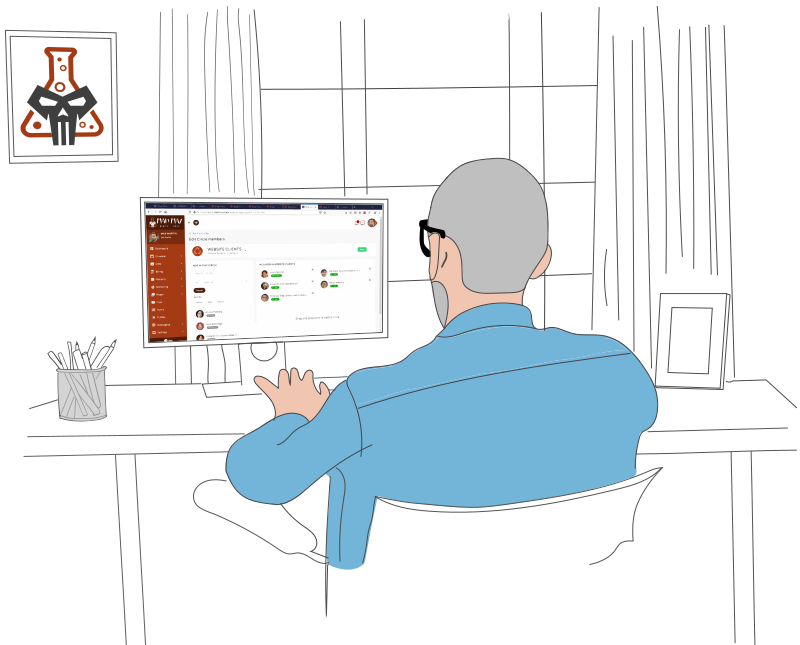
What Does Follow-Up Automation Do?
Follow-up automation handles six core functions that keep deals moving. Understanding what each does helps you evaluate whether automated follow-up makes sense for your sales process.
1. Automated Task Creation
When deals move between pipeline stages, follow-up tasks create automatically. Rep gets a task: “Call prospect — proposal sent 3 days ago.” No manual reminders needed. Tasks are assigned to the right team member based on deal ownership, with due dates calculated from stage entry.
Why it matters: Reps spend time selling, not creating reminders. Every deal gets consistent follow-up regardless of how busy the team gets.
2. Email Sequence Triggers
Trigger multi-step email sequences based on pipeline stage, time delays, or prospect behavior. Sequences can include check-in emails, value-add content, case studies, and re-engagement messages. Each sequence adapts to the deal’s current stage and the prospect’s engagement level.
Why it matters: Consistent email follow-up at the right intervals keeps your company top-of-mind without requiring reps to manually draft and schedule every message.
3. Behavioral Triggers
Automation responds to what prospects do. Opened your proposal? Trigger immediate follow-up. Clicked pricing three times? Alert the rep. No response in 7 days? Escalate to manager. Behavioral triggers turn prospect activity into actionable sales intelligence.
Why it matters: Timing is everything in sales. Reaching out when a prospect is actively engaged dramatically increases response rates and conversion.
4. Pipeline-Stage Automation
Each pipeline stage can have its own follow-up sequence. “Proposal Sent” triggers a 3-5-7 day check-in sequence. “Negotiation” triggers weekly status updates. “Verbal Agreement” triggers contract preparation. Stage-specific automation ensures the right follow-up happens at the right time.
Why it matters: Different deal stages require different follow-up strategies. Automation ensures each stage gets its optimal sequence without manual configuration per deal.
5. Escalation Workflows
When follow-ups fail or deals stall beyond expected timelines, escalate automatically. Manager gets notified. Senior rep gets assigned. Re-engagement sequence activates. Escalation prevents deals from dying quietly in the pipeline without anyone noticing.
Why it matters: Most lost deals aren’t actively rejected — they’re forgotten. Escalation workflows catch stalled deals before they go cold permanently.
6. Multi-Channel Follow-Up
Combine email, task reminders, and internal notifications in one sequence. Not every follow-up should be an email. Some require phone calls, some need internal coordination. Multi-channel sequences ensure the right follow-up method is used at each touchpoint.
Why it matters: Prospects who ignore emails may respond to phone calls. Varying your follow-up channels increases overall response rates and prevents message fatigue.
Why This Integration Matters
Follow-up connected to CRM pipeline, email marketing, proposals, projects, and automation engine. Follow-up isn’t isolated — it responds to your entire sales process. When a deal stage changes, follow-up adjusts. When a prospect engages with marketing, sales gets notified. When a proposal is viewed, the sequence accelerates. One system driving intelligent, context-aware follow-up across every touchpoint.
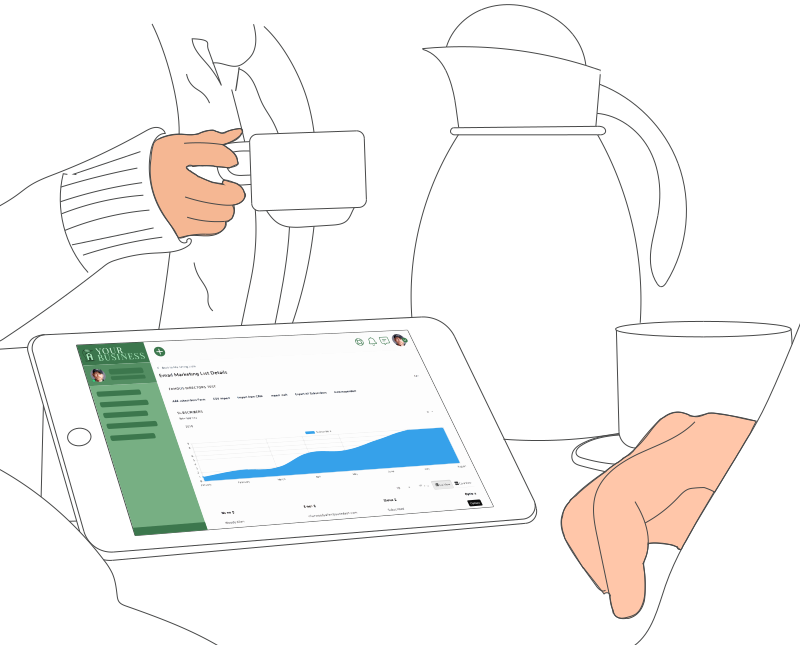
Who Uses Sales Follow-Up Automation?
Follow-up automation is valuable wherever sales cycles involve multiple touchpoints and deals require persistent outreach. Certain industries benefit dramatically.
B2B Services (consulting, marketing agencies, design shops) manage multiple concurrent prospects with long sales cycles. Follow-up automation ensures every prospect gets consistent touchpoints through complex sales processes involving multiple decision-makers. No deal falls through the cracks.
SaaS Sales Teams rely on systematic follow-up sequences across free trials, demos, and enterprise deals. Follow-up automation triggers based on trial activity, demo attendance, and proposal engagement — ensuring every qualified lead gets timely outreach.
Professional Services (law, accounting, wealth management) manage sensitive prospect relationships requiring multiple touchpoints before engagement. Follow-up automation maintains consistent contact while tracking engagement signals that indicate readiness to proceed.
Real Estate professionals juggle dozens of active prospects at various stages — from initial inquiry to closing. Follow-up automation manages showing follow-ups, offer check-ins, and contract status updates across every active deal simultaneously.
Insurance & Financial Services manage long consideration periods where prospects need multiple touchpoints before committing. Follow-up automation delivers educational content, policy comparisons, and timely check-ins that build trust and move prospects toward decisions.
Recruiting & Staffing firms manage hundreds of candidates and client relationships simultaneously. Follow-up automation keeps candidates engaged through placement processes and ensures client hiring managers receive consistent status updates.
Team Size Matters
Solo salespeople managing 10-20 active prospects benefit from basic follow-up sequences that ensure consistent outreach without manual tracking.
Small teams (2-5 people) see immediate value from automated sequences and escalation rules. When multiple reps work the same pipeline, follow-up automation prevents duplicate outreach and ensures every prospect gets consistent attention.
Growing teams (5-50 people) need escalation workflows, team notifications, and effectiveness reporting. As team size grows, the cost of inconsistent follow-up and lost deals multiplies.
If your business has active prospects, a multi-step sales process, and deals that require persistent outreach, you benefit from follow-up automation. The bigger your pipeline or the longer your sales cycle, the more valuable automated follow-up becomes.
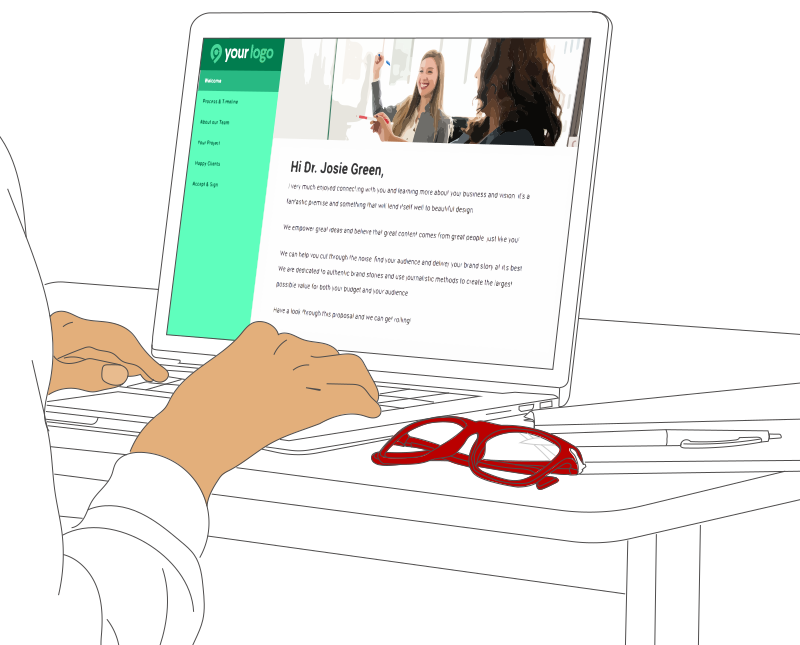
Follow-Up Automation vs. Standalone Tools: The Integration Advantage
Standalone follow-up tools like Salesloft, Outreach, and basic email sequence builders are powerful for outbound sales cadences. They also create friction when follow-up needs to respond to CRM pipeline changes, proposal activity, and project status.
The Problem
A B2B services firm uses Salesloft for follow-up sequences. Here’s what happens when follow-up needs to adapt:
- Build email sequences in Salesloft disconnected from CRM pipeline stages
- Manually pause sequences when deals move forward in a separate CRM
- Switch to another tool to check if proposals were viewed
- Manually create follow-up tasks in a separate project management tool
- No visibility into which follow-ups actually influenced deal progression
Result: Follow-up sequences that don’t respond to deal reality. Manual coordination between tools. Sequences that keep running after deals close. Sales team spends more time managing tools than actually following up.
The SuiteDash Approach
Follow-up automation connected to CRM pipeline, proposals, email marketing, and projects — all in one interface, all sharing the same customer database.
When a deal moves pipeline stages, follow-up sequences adjust automatically. When a prospect views a proposal, the rep gets notified instantly. Email sequences pull from the same contact database as your CRM. Nobody switches tools or manually updates sequences.
One interface. One shared data layer. Complete follow-up visibility from first touchpoint through closed deal.
Why This Matters
Standalone follow-up tools like Salesloft and Outreach are powerful for enterprise teams with complex sales requirements. They excel when your only goal is booking meetings from cold lists.
For small-to-mid-market service businesses, consulting agencies, and consultants, the integration advantage often outweighs standalone follow-up specialization. You’re not optimizing one function (outbound sequences). You’re optimizing the entire sales process (pipeline management through follow-up through closing).

What to Look For in Follow-Up Automation
When evaluating follow-up automation software, look for these capabilities:
Automated Task Creation
When deals change pipeline stages, follow-up tasks should create automatically and assign to the right rep. Look for systems that calculate due dates from stage entry and support task templates per pipeline stage.
Email Sequences
Build multi-step email sequences with configurable time delays, personalization tokens, and conditional branching. Sequences should support check-in emails, value-add content, case studies, and re-engagement messages tailored to deal context.
Conditional Logic
Follow-up sequences should branch based on prospect behavior. If a prospect opens an email, take one path. If they don’t respond, take another. Conditional logic ensures follow-up adapts to engagement rather than running the same sequence regardless of response.
Pipeline Triggers
Follow-up sequences should trigger automatically when deals enter specific pipeline stages. Moving a deal to “Proposal Sent” should immediately start the proposal follow-up sequence without manual intervention.
Escalation Rules
When deals stall or follow-ups go unanswered beyond expected timelines, the system should escalate automatically. Manager notifications, senior rep reassignment, and re-engagement sequences should activate without manual monitoring.
Team Notifications
Alert team members when prospects take high-intent actions — viewing proposals, clicking pricing pages, or responding to sequences. Real-time notifications ensure reps act on engagement signals while prospects are still actively interested.
Mobile Access
Access follow-up status, sequence progress, and task lists from any device. Field reps need to see which follow-ups are due, log call outcomes, and trigger next steps from their phone — not just from a desktop.
Follow-Up History
Maintain a complete record of every follow-up touchpoint per prospect — emails sent, tasks completed, calls logged, and sequence progression. History should be visible on the contact record so any team member can see exactly where follow-up stands.
Effectiveness Reporting
Track which follow-up sequences drive the most conversions, which touchpoints get the best response rates, and where deals stall despite follow-up. Reporting should connect follow-up activity to pipeline outcomes so you can optimize sequences based on results.
CRM and Email Integration
Follow-up automation should connect directly to your CRM pipeline and email marketing platform. When a deal moves stages, follow-up adjusts. When a marketing email gets engagement, sales follow-up triggers. Integration eliminates the gap between tools.
SuiteDash includes all 10 of these features. Additionally, follow-up automation is natively connected to CRM, projects, invoicing, email marketing, and automation across modules. You’re not stitching together standalone tools. You’re using one integrated system where follow-up responds to your entire business.
How to Choose Follow-Up Automation Software
1. Evaluate Your Sales Volume
Low volume (5-15 active deals): Basic email sequences and task reminders may be sufficient. Manual follow-up is still manageable at this scale.
Medium volume (15-50 active deals): Automated sequences become essential. No rep can consistently follow up with 30+ prospects manually without dropping balls.
High volume (50+ active deals): Advanced automation with conditional logic, escalation rules, and effectiveness reporting becomes critical for managing pipeline at scale.
2. Consider Your Sales Cycle Length
Short sales cycle (1-4 weeks): Simple 2-3 step follow-up sequences. Focus is on speed and immediate response to engagement signals.
Medium sales cycle (4-12 weeks): Multi-step sequences with conditional branching. You need follow-up that adapts to prospect engagement and pipeline stage changes.
Long sales cycle (3-12 months): Complex sequences with escalation rules, re-engagement campaigns, and multi-channel touchpoints. Follow-up persistence is the difference between winning and losing these deals.
3. Assess Integration Requirements
Standalone follow-up: If you only need outbound email sequences disconnected from CRM, a specialized tool like Salesloft or Outreach works. You’re optimizing one function deeply.
Integrated follow-up: If follow-up needs to respond to CRM pipeline changes, proposal views, and email marketing engagement, an all-in-one platform eliminates manual coordination.
API-heavy integration: If you use 10+ different tools and need follow-up to respond to events across all of them, a modular platform with strong APIs might be necessary.
4. Evaluate Team Coordination Features
Solo rep: Basic sequence tools work fine. No coordination needed — one person manages their own follow-up.
Small team (2-5 reps): Need visibility into who is following up with which prospect, escalation when reps miss follow-ups, and shared sequence templates so outreach stays consistent.
Larger team (5+ reps): Need manager dashboards, team performance reporting, round-robin assignment, and escalation workflows that route stalled deals to senior reps automatically.
5. Compare Total Cost
Standalone follow-up tools: Salesloft ($125-185/month per user), Outreach ($100-150/month per user). These are dedicated sequence tools that still require a separate CRM, email marketing platform, and proposal tool.
CRM with built-in sequences: HubSpot Sales Hub ($50-150/month per user) includes basic sequences but charges extra for advanced automation. Still requires separate tools for proposals and project management.
Integrated platform: SuiteDash ($14-69/month per user) includes follow-up automation plus CRM, pipeline, email marketing, proposals, and projects. No additional tools needed.
For most sales teams, the total cost of standalone follow-up tools plus CRM plus email marketing exceeds $300/month per user. SuiteDash consolidates all of this into one platform at a fraction of the cost.
SuiteDash’s Approach to Sales Follow-Up
SuiteDash’s follow-up automation isn’t positioned as a standalone outbound sequencing tool for enterprise SDR teams running cold outreach at massive scale. Salesloft and Outreach are designed for that. SuiteDash’s follow-up has a different philosophy: integration with CRM, pipeline, and email marketing for small-to-mid-market sales teams.
1. Pipeline-Based Triggers
Follow-up sequences in SuiteDash trigger directly from pipeline stage changes. Move a deal to “Proposal Sent” and the proposal follow-up sequence starts automatically. Move to “Negotiation” and the sequence switches to weekly check-ins. No manual sequence assignment needed.
This eliminates the disconnect between pipeline and follow-up. In standalone tools, reps must manually start and stop sequences when deals move. In SuiteDash, pipeline movement drives follow-up automatically.
2. Behavior-Based Escalation
When prospects go silent, SuiteDash escalates automatically. No response after three follow-ups? Manager gets notified. Deal stalled in one stage beyond the expected timeline? Senior rep gets assigned. Re-engagement sequence activates for cold prospects.
Contrast this with standalone tools where stalled deals sit unnoticed until someone manually reviews the pipeline. SuiteDash catches stalled deals automatically and takes action before they go cold permanently.
3. Complete Visibility
Every follow-up touchpoint is visible on the contact record — emails sent, tasks completed, sequences active, escalations triggered. Managers see team-wide follow-up activity across the entire pipeline. Reps see exactly where each prospect stands in their follow-up sequence. All from one automation platform.
No switching between tools to understand follow-up status. No exporting reports from one system to analyze in another. One dashboard showing everything.
Real Example
A B2B services firm sends a proposal to a prospect. In traditional systems, the rep manually: sets a reminder to follow up in 3 days, checks if the proposal was opened in a separate tool, sends a follow-up email manually, waits and hopes, sets another reminder, eventually forgets or gets busy with other deals.
In SuiteDash, one automation handles all of this. Proposal sent triggers the follow-up sequence automatically. Day 3: check-in email sends. Day 5: task created for phone call. Day 7: if no response, escalation email from manager. Prospect opens proposal? Rep gets instant notification. Prospect clicks pricing? Sequence accelerates to immediate outreach.
All happen automatically. No manual reminders. No forgotten follow-ups.
This is what integrated follow-up means. It’s not just “send emails on a schedule.” It’s follow-up that responds to your pipeline, adapts to prospect behavior, and escalates when deals stall — all automatically.
Sales Follow-Up Automation: Frequently Asked Questions
What is sales follow-up automation?
Sales follow-up automation creates systematic, trigger-based touchpoint sequences that ensure every prospect receives consistent outreach throughout the sales process. Instead of relying on reps to manually remember and execute follow-ups, automation triggers emails, tasks, and notifications based on pipeline stage changes, time delays, and prospect behavior. This ensures no deal dies from neglect and every prospect gets the right follow-up at the right time.
What are the core features of follow-up automation?
Essential follow-up automation features include automated task creation, multi-step email sequences, conditional logic branching, pipeline-stage triggers, escalation workflows, and team notifications. Advanced platforms add behavioral triggers (responding to proposal views, email opens, pricing page visits), multi-channel sequences (email plus phone tasks plus internal alerts), effectiveness reporting, and CRM/email marketing integration. The right feature set depends on your sales volume, cycle length, and how many tools your follow-up needs to connect with.
Why do sales teams need follow-up automation?
Research consistently shows most sales happen after the 5th-7th touchpoint, yet most reps give up after one or two attempts. Follow-up automation ensures every prospect gets consistent, persistent outreach regardless of how busy the team gets. Without automation, follow-up depends on individual rep discipline — and discipline breaks down at scale. A rep managing 30+ active prospects cannot consistently remember who needs a check-in, which proposal was sent three days ago, and whose contract is sitting unsigned. Automation solves this systematically.
What’s the difference between follow-up automation and email sequences?
Email sequences are one component of follow-up automation — they send pre-written emails on a schedule. Full follow-up automation goes further: it triggers sequences based on pipeline stage changes, creates tasks for phone calls and meetings, responds to prospect behavior (proposal views, email opens), escalates stalled deals to managers, and coordinates multi-channel touchpoints across email, tasks, and notifications. Email sequences are linear; follow-up automation is responsive and adaptive.
How does follow-up automation improve close rates?
Follow-up automation improves close rates through three mechanisms: consistency (every prospect gets the same thorough follow-up regardless of rep workload), timing (behavioral triggers ensure outreach happens when prospects are actively engaged), and persistence (automated sequences continue following up through the 5th-7th touchpoint where most deals close). Teams using structured follow-up automation typically see 20-40% improvement in pipeline-to-close conversion rates because fewer deals die from neglect.
What does follow-up automation software cost?
Standalone follow-up tools like Salesloft cost $125-185/month per user and Outreach costs $100-150/month per user. These are dedicated sequence tools that still require a separate CRM, email marketing platform, and proposal tool. HubSpot Sales Hub with sequences costs $50-150/month per user. All-in-one platforms like SuiteDash cost $14-69/month per user and include follow-up automation plus CRM, pipeline, email marketing, proposals, and projects. For most teams, the total cost difference is significant — standalone tools plus CRM can exceed $300/month per user versus $14-69/month with SuiteDash.
How long does it take to set up follow-up automation?
Basic follow-up sequences can be configured in a few hours — define your pipeline stages, write your follow-up emails, set time delays, and activate. More sophisticated setups with conditional logic, behavioral triggers, and escalation workflows take 1-2 weeks to design and test. The key is starting simple: build one follow-up sequence for your most common deal stage (like “Proposal Sent”), measure results, then expand to other stages. SuiteDash’s visual automation builder makes it easy to create and modify sequences without technical expertise.
What industries benefit most from follow-up automation?
Any business with a multi-step sales process benefits from follow-up automation. High-value industries include B2B services (consulting, agencies), SaaS sales teams, professional services (law, accounting, wealth management), real estate, insurance and financial services, and recruiting/staffing firms. Industries with longer sales cycles (4+ weeks) and multiple decision-makers see the most dramatic results because more touchpoints are required before closing. The higher your average deal value and the longer your sales cycle, the more valuable systematic follow-up becomes.
Can follow-up automation work for small sales teams?
Yes — follow-up automation is especially valuable for small teams because they have the least bandwidth for manual follow-up. A solo salesperson managing 15+ active prospects benefits immediately from automated sequences that ensure consistent outreach. Small teams (2-5 reps) see dramatic value from escalation rules and shared visibility — no more wondering if a colleague already followed up with a prospect. The key question: Are you managing enough active deals that manual follow-up is inconsistent? If yes, automation adds value regardless of team size.
How does follow-up automation integrate with CRM and email marketing?
Standalone follow-up tools like Salesloft and Outreach integrate with CRMs (Salesforce, HubSpot) through APIs and connectors, but the integration is never seamless — sequences don’t automatically respond to pipeline changes in real-time. All-in-one platforms like SuiteDash eliminate integration entirely because follow-up automation, CRM pipeline, email marketing, and proposals all share one shared data layer. No syncing, no middleware, no manual coordination between tools.
See How Follow-Up Connects with SuiteDash
Follow-up automation is one piece of the integrated SuiteDash platform. Explore how it works with other modules:
Follow-Up + CRM — Trigger follow-up sequences directly from CRM pipeline stage changes.
Follow-Up + Pipeline — Automate outreach based on deal progression and stall detection.
Follow-Up + Email Marketing — Combine sales follow-up with marketing sequences using the same contact database.
Follow-Up + Automation — Build complex follow-up workflows with conditional logic, escalation, and multi-channel touchpoints.